How a Failed Defrost Cycle Damages Your Heat Pump
Champion Air
Learn how a failed defrost cycle damages your heat pump and what signs to watch for before costly repairs occur.
How a Failed Defrost Cycle Damages Your Heat Pump
Why Understanding How a Failed Defrost Cycle Damages Your Heat Pump Could Save You a Costly Repair
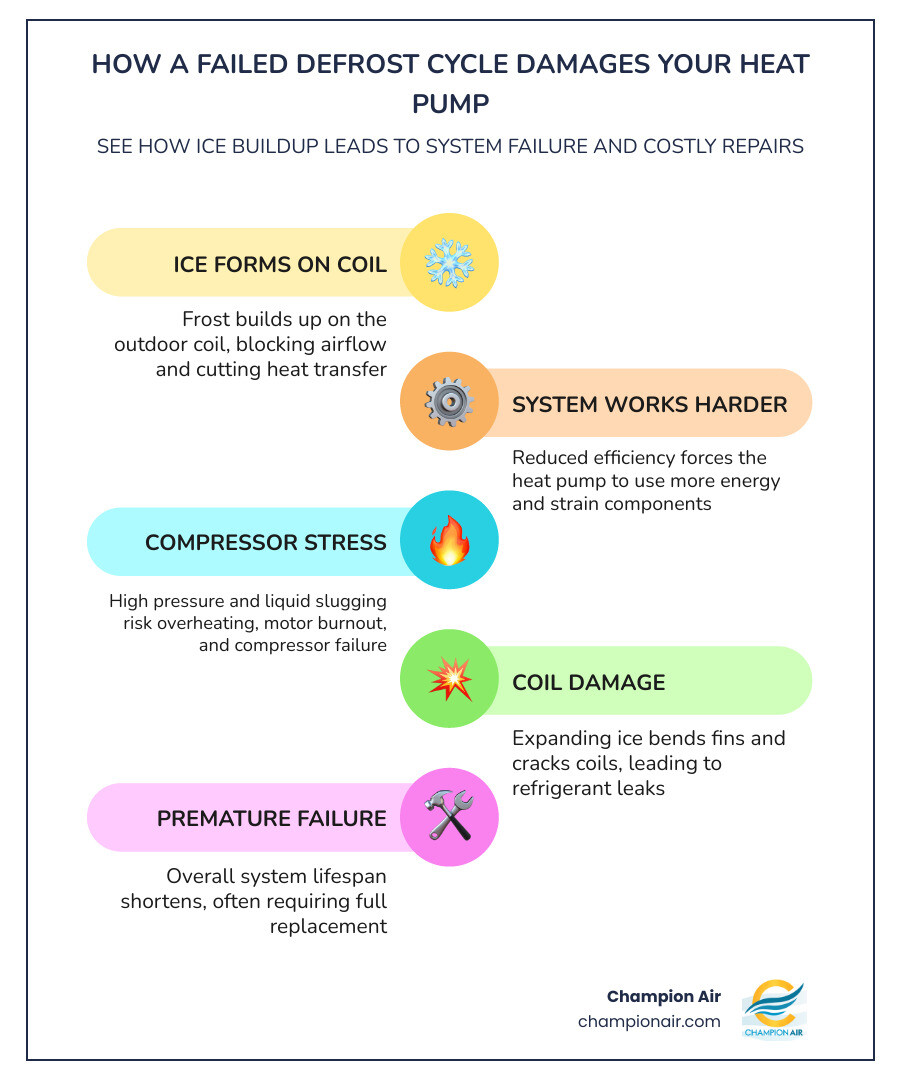
How a failed defrost cycle damages your heat pump comes down to one core problem: ice takes over, and your system pays the price. Here's a quick breakdown of the damage chain:
- Ice builds up on the outdoor coil - blocking airflow and cutting heat transfer
- The system works harder to compensate - driving up energy use and putting strain on components
- The compressor is forced to run under stress - risking overheating, liquid slugging, and eventual failure
- Coil fins bend or crack - leading to refrigerant leaks and structural damage
- The entire system's lifespan shortens - turning a preventable problem into a premature replacement
Most homeowners don't realize a defrost problem is brewing until thick ice has already done real damage. A heat pump that can't clear frost from its outdoor coil doesn't just lose efficiency — it quietly destroys itself from the outside in. According to research from the HVAC industry, a defrost failure can reduce system efficiency by 10–15% on average, with some cases showing up to 40% loss in heating capacity. Left unchecked, what starts as a faulty sensor or a dirty coil can escalate into compressor failure and a repair bill that rivals full system replacement.
Even in Arizona, where winters are mild compared to the rest of the country, cold snaps and high-humidity nights create exactly the right conditions for frost to form — and for a struggling defrost system to fall behind.
I'm Barry Farah, and as the leader of one of Arizona's largest Lennox family-owned residential HVAC replacement companies, I've seen how a failed defrost cycle damages your heat pump in ways that catch homeowners completely off guard. In the sections below, I'll walk you through everything you need to know — from how the defrost cycle works to the warning signs, causes, and steps you can take to protect your system.
Important how a failed defrost cycle damages your heat pump terms:
- heat pump fan motor failure causes and repair options
- most common heat pump repairs and what causes them
What is the Heat Pump Defrost Cycle and Why is it Necessary?
To understand how a failure causes so much destruction, we first need to look at what the defrost cycle actually does.
During the winter, your heat pump works by reversing the cooling process you rely on all summer. Instead of pushing heat out of your home, it extracts thermal energy from the cold outdoor air and brings it inside. To do this, the outdoor coil must run at temperatures significantly colder than the surrounding air—often dropping well below freezing.
When outdoor temperatures hover between 30°F and 40°F, and there is moisture in the air, that moisture condenses and freezes directly onto the outdoor coil. This frost acts as an insulating blanket. Ironically, because frost blocks heat transfer, the system cannot pull heat from the air efficiently.
This is where the defrost cycle comes to the rescue. When the system detects frost, it temporarily uses its reversing valve to switch back into cooling mode. This sends hot, high-pressure refrigerant gas back through the outdoor coil to melt the ice. To speed up the process, the outdoor fan motor shuts off so the cold air doesn't keep cooling the coils down. Inside your home, the auxiliary heating elements (heat strips) turn on so you don't feel a blast of cold air while the system is defrosting.
There are two primary ways systems control this process:
- Time-Temperature Defrost: Older or basic systems use a simple timer. Every 30, 60, or 90 minutes of compressor run time, the system checks if the coil temperature is below freezing. If it is, it initiates defrost, regardless of how much ice is actually there.
- Demand Defrost: Modern, high-efficiency systems use advanced sensors to monitor temperature, humidity, and pressure. They only trigger a defrost cycle when ice is actually restricting heat transfer. This is much more efficient and reduces unnecessary wear and tear on your equipment.
Understanding these mechanics is key to recognizing why keeping your system in peak condition is vital, especially when evaluating Are Heat Pumps Efficient in Extreme Heat and cold weather alike.
The Mechanics of Destruction: How a Failed Defrost Cycle Damages Your Heat Pump
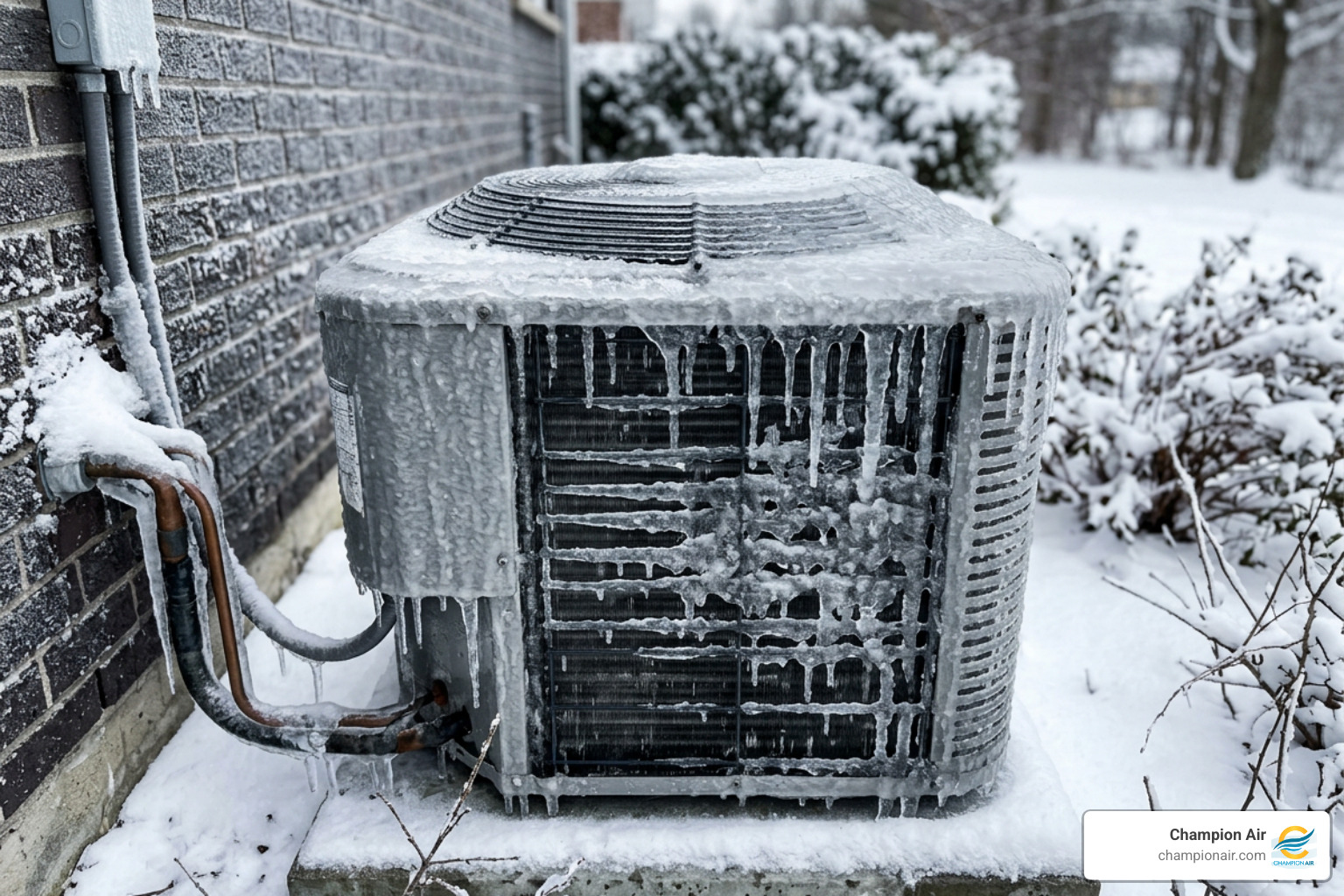
When the defrost cycle fails, the physical consequences are swift and severe. Without a functional melting cycle, frost keeps accumulating, eventually turning into a thick, solid block of ice that completely encases the outdoor unit. This restriction of airflow puts immense physical and mechanical strain on the entire system.
As the ice thickens, the heat pump must run longer and harder to pull whatever warmth it can through the frozen barrier. This leads to skyrocketing energy bills and subjects internal components to extreme, prolonged stress. This cascade of issues is at the root of the Most Common Heat Pump Repairs and What Causes Them.
Ice Buildup and How a Failed Defrost Cycle Damages Your Heat Pump Coils
The outdoor coil is a delicate assembly of copper tubing surrounded by thousands of thin aluminum fins. These fins are designed to maximize surface area for heat transfer, but they are incredibly fragile.
As water freezes, it expands with immense force. When a failed defrost cycle allows ice to pack tightly between these aluminum fins, the physical expansion bends and crushes the metal. This permanent structural damage permanently restricts airflow even after the ice eventually melts.
Worse, the expanding ice can put direct pressure on the copper refrigerant lines. Over time, the constant physical stress and vibration of the unit running while frozen can cause these copper lines to crack, resulting in costly refrigerant leaks.
Long-Term Stress: How a Failed Defrost Cycle Damages Your Heat Pump Compressor
The compressor is the heart of your heat pump, and it is also the most expensive component to replace. When a defrost cycle fails, the compressor is subjected to two major hazards:
- Liquid Slugging: For a compressor to work safely, the refrigerant entering it must be in a fully vaporized state. If the outdoor coil is insulated by a thick block of ice, the refrigerant cannot absorb enough heat to vaporize. Liquid refrigerant flows back down the line directly into the compressor. Because liquids cannot be compressed, this "liquid slugging" can bend valves, break pistons, and instantly destroy the compressor's internal mechanics.
- Overheating and Motor Burnout: Operating with restricted airflow causes the compressor to run at elevated head pressures. This forces the motor to draw more electrical current, generating extreme internal heat. Over time, this heat degrades the protective winding insulation inside the motor, leading to a complete electrical short and compressor burnout.
When you consider How Long Do Heat Pumps Last, ignoring defrost problems is one of the fastest ways to cut that lifespan in half.
Common Signs Your Heat Pump is Not Defrosting Properly
Catching a defrost failure early can mean the difference between a simple sensor swap and a complete system replacement. Keep an eye out for these common warning signs:
- A Solid Block of Ice: A light layer of powdery frost that comes and goes is normal. A thick, solid block of ice that completely covers the metal coils and remains there for hours is a clear sign of failure.
- Constant Cold Air Indoors: If your home feels chilly and the heat pump seems to run constantly without raising the temperature, the outdoor unit may be frozen solid.
- Unusual Noises: While some hissing and whooshing is normal during a brief defrost cycle, loud banging, grinding, or severe vibrating noises indicate the fan blades may be hitting ice buildup or the compressor is struggling.
- Frequent Cycling: If the system is turning on and off every few minutes, it may be tripping its high-pressure safety switch due to ice buildup.
- The Outdoor Fan Continues Running: During a normal defrost cycle, the outdoor fan motor must shut off to allow the coil to heat up. If you notice steam rising but the fan is still spinning rapidly, the defrost controls are malfunctioning.
If you notice any of these issues, it is highly recommended to review Heat Pump Troubleshooting Tips Before Calling a Pro to safely assess the situation before scheduling service.
What Causes a Heat Pump Defrost Cycle to Fail?
A defrost cycle relies on several mechanical and electrical components working in perfect harmony. If even one of these components fails, the entire self-cleaning process breaks down.
| Defrost Failure Cause | Primary Symptom | Impact on the System |
|---|---|---|
| Faulty Defrost Sensor | Ice forms, but defrost never initiates | Complete freeze-up; potential compressor liquid slugging |
| Bad Defrost Control Board | System gets stuck in defrost or never enters it | Rapid ice buildup or prolonged blowing of cold air indoors |
| Low Refrigerant Levels | Uneven frost patterns or partial freezing | Inadequate heat generation to melt ice during defrost |
| Failed Reversing Valve | System fails to switch modes | Complete loss of heating or defrost capability |
| Outdoor Fan Motor Issues | Fan continues to run during defrost | Coil cannot reach the 57°F required to melt ice and end the cycle |
| Dirty Outdoor Coil | Ice forms rapidly in dirt-clogged areas | Insulated coils block heat transfer and accelerate ice accumulation |
Understanding these root causes helps pinpoint whether your system needs a quick component replacement or a more comprehensive system repair.
Preventing Defrost Failures and Protecting Your System
While mechanical failures can happen, many defrost issues are entirely preventable through consistent, proactive maintenance.
- Keep the Outdoor Unit Clear: Ensure there is at least 18 to 24 inches of clear space around your outdoor unit. Keep shrubs trimmed back, and regularly clear away fallen leaves, grass clippings, and windblown debris.
- Maintain Clean Air Filters: A clogged indoor air filter restricts airflow, which disrupts the pressure balance of the entire system. Change your air filters every 1 to 3 months, especially during peak heating and cooling seasons.
- Keep the Coils Clean: Dirt and grime on the outdoor coils act as an insulator, promoting faster frost formation and making it harder for the defrost cycle to work. Gently rinse the coils with a garden hose annually.
For a complete breakdown of how to keep your system running smoothly, check out our Heat Pump Tune-Up Guide for Arizona Homeowners.
If you live in the East Valley or surrounding areas, scheduling professional maintenance is the most reliable way to catch failing sensors before the winter cold sets in. You can learn more about our local services by visiting Heat Pump Maintenance in Scottsdale AZ: Your Go-To for Affordable Expert Service and Heat Pump Maintenance in Mesa AZ: Your Go-To Guide for Affordable Top-Rated Service.
Frequently Asked Questions About Heat Pump Defrosting
How long should a normal defrost cycle last?
A standard defrost cycle should last between 5 and 15 minutes. Depending on the outdoor temperature and humidity, these cycles typically occur every 30 to 90 minutes. During a normal cycle, it is completely common to see steam rising from the outdoor unit and hear a brief hissing or whooshing sound as the reversing valve shifts.
Is it normal to see ice on my heat pump in winter?
A light, uniform coating of frost is completely normal during cold, damp winter nights. However, thick, solid ice that covers the entire unit, blocks the grilles, or starts encasing the fan blades is a sign of a defrost failure that requires immediate professional attention.
Can I manually defrost my heat pump?
Yes, but you must do it safely. You can switch your thermostat to "Cooling" or "Fan Only" mode to run the indoor fan and help melt the ice naturally. Alternatively, you can gently spray the outdoor unit with a garden hose using lukewarm water. Never use sharp objects like screwdrivers or ice picks to chip away at the ice, as you will likely puncture the delicate aluminum fins or copper refrigerant lines.
Conclusion
A failed defrost cycle is more than just a minor winter inconvenience — it is a progressive mechanical hazard that can quietly destroy your heat pump's most critical components. By understanding how the defrost cycle works, recognizing the early warning signs of failure, and keeping up with routine maintenance, you can protect your investment and keep your home comfortable all year long.
If your heat pump is struggling to defrost, showing signs of heavy ice buildup, or making unusual noises, don't wait for a complete system breakdown. At Champion Air, we provide top-rated, reliable HVAC services across Phoenix, Scottsdale, Mesa, and the surrounding Arizona communities. We specialize in fast response times and 24/7 support with no overtime charges, ensuring your home stays comfortable when you need it most.
For immediate assistance, visit our Emergency Heat Pump Repair in Phoenix AZ: Fast Solutions When You Need Them Most page, or contact us today to schedule our professional heat pump services.
About the Author
Champion Air
More Articles
View All PostsKeep Reading
Related Articles


Ready to Get Started?
Whether you need a repair, maintenance, or a new installation, our expert team is here to help.