Arizona Homeowners Guide to Timing Your Heat Pump Tune Up Perfectly
Champion Air
Boost efficiency with this heat pump tune up guide for arizona homeowners. Schedule your desert maintenance at the perfect time.
Arizona Homeowners Guide to Timing Your Heat Pump Tune Up Perfectly
Why Every Arizona Homeowner Needs a Heat Pump Tune-Up Plan
This heat pump tune up guide for arizona homeowners covers exactly what you need to know to keep your system running efficiently all year long. Here is a quick summary:
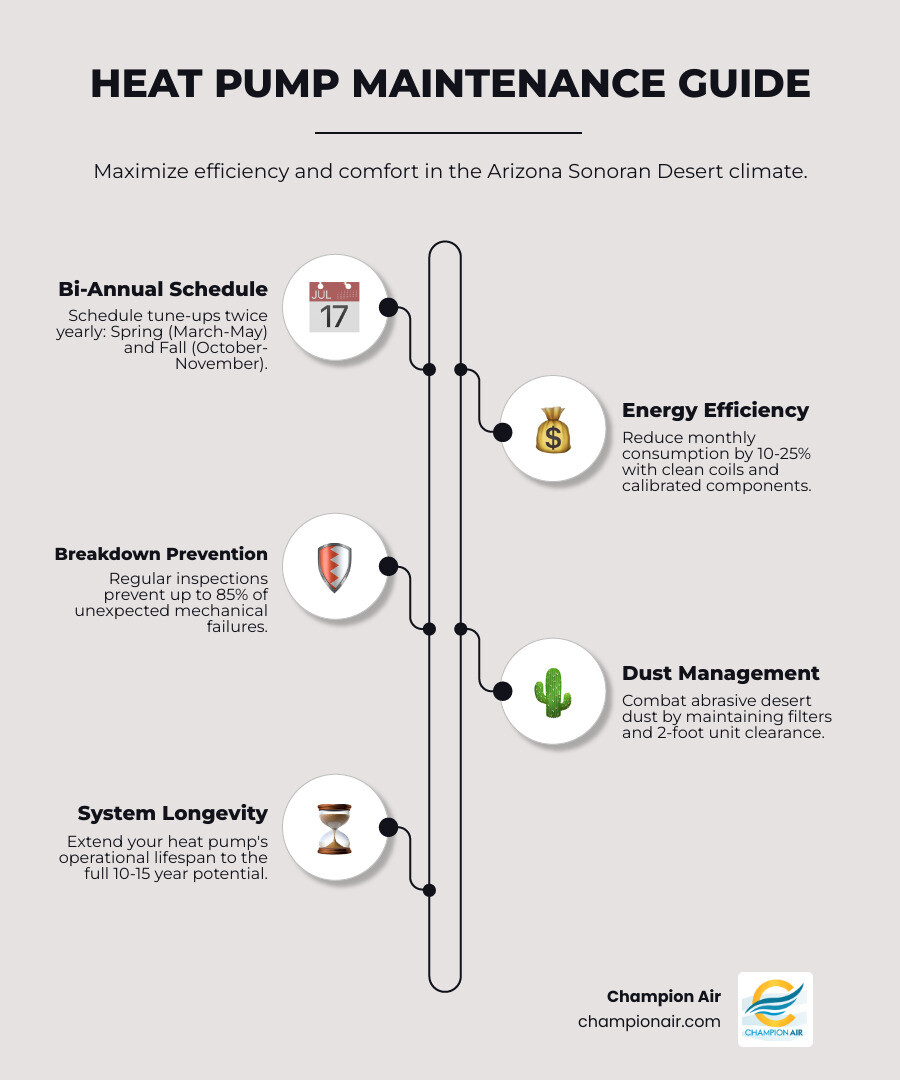
- How often: Twice per year — once in spring (March-May) and once in fall (October-November)
- Why it matters: Proper maintenance can reduce energy consumption by 10-25% and prevent up to 85% of breakdowns
- Best timing: Schedule before the summer heat peaks and before the first winter cold snap
- Who does what: Homeowners handle filter changes and debris clearing; professionals handle refrigerant, coils, and electrical checks
- When to replace: If your system is 10-15 years old and repairs are becoming frequent, replacement may be smarter than another tune-up
When you live in the desert, it is easy to forget your home even has a heating system. But Arizona heat pumps are a different story — they never really get a day off. Unlike systems in milder climates that sit idle for months at a time, your heat pump works through scorching 110°F summers and surprisingly cold winter mornings, switching between cooling and heating mode without a break. That constant year-round demand, combined with desert dust, monsoon storms, and dramatic daily temperature swings, puts Arizona heat pumps under a level of stress that most standard maintenance advice simply does not account for.
I'm Barry Farah, and as the leader of one of Arizona's largest Lennox family-owned residential replacement companies, I've spent years helping Phoenix-area homeowners get the most out of their heat pump systems — which is exactly why this heat pump tune up guide for arizona homeowners matters to me personally. Let's walk through everything you need to know to protect your investment and stay comfortable no matter what the desert throws at you.
Why a Heat Pump Tune Up Guide for Arizona Homeowners is Essential
In May 2026, we are seeing more homeowners than ever realize that their HVAC system is the most hardworking appliance in the house. In the Sonoran Desert, your heat pump is a year-round workhorse. It doesn't just provide relief during a 115°F July afternoon; it also keeps you warm when the desert floor drops to 40°F in January. This dual-purpose role means your system is essentially working double-time compared to a furnace in the Midwest or an AC unit in the Pacific Northwest.
One of the biggest threats to Heat Pump Maintenance Tune Up Phoenix AZ is our unique environment. Desert dust is fine, abrasive, and relentless. When it settles on your outdoor coils or chokes your air filters, it forces the system to work harder to move air. This leads to a "suffocating" effect where the compressor strains, energy bills spike, and the internal components wear out prematurely.
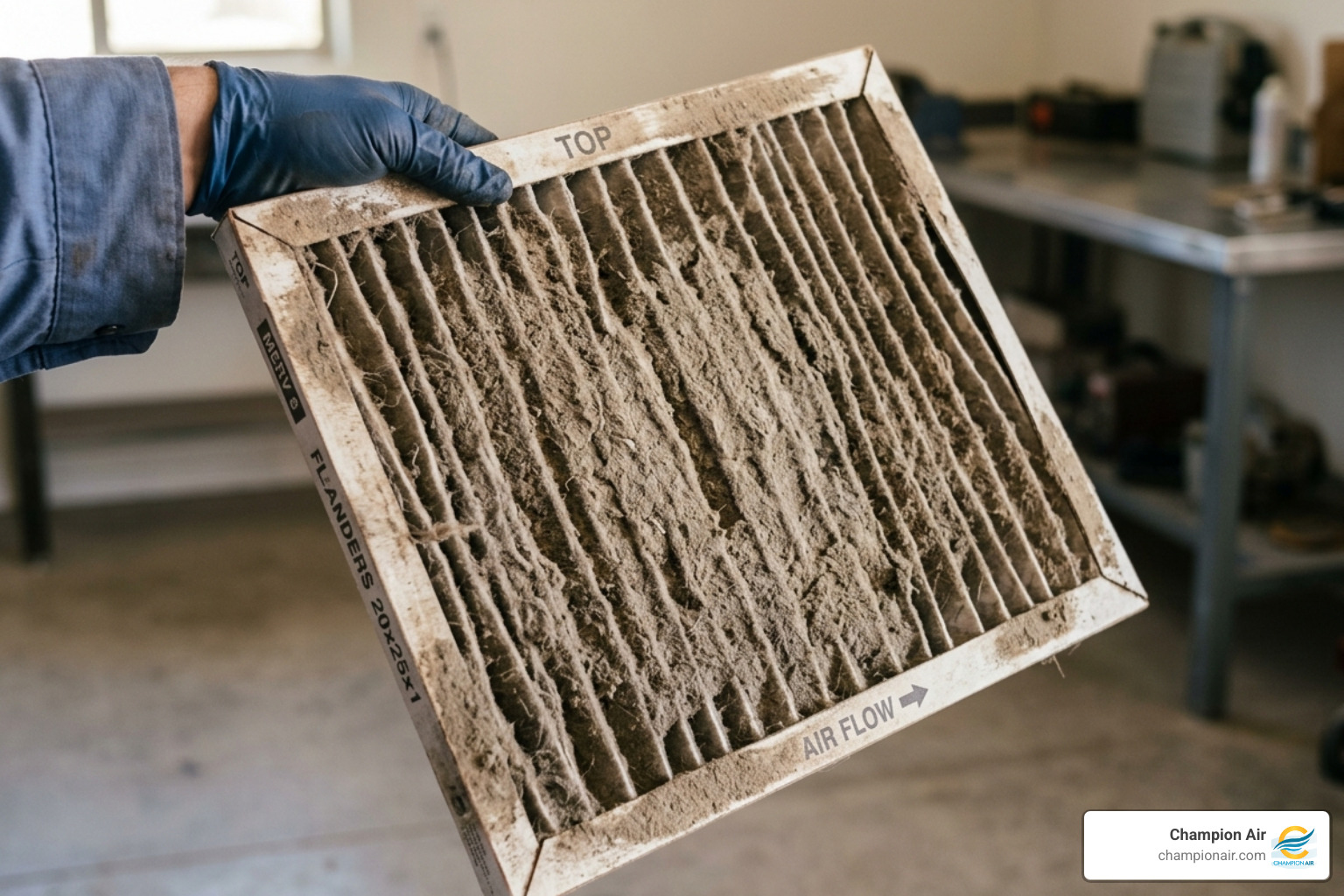
By following a consistent maintenance plan, you can enjoy a 20 to 25 percent reduction in energy consumption. For the average home in Scottsdale or Peoria, that translates to significant savings over the course of a year. Beyond the wallet, regular tune-ups are vital for indoor air quality. During monsoon season, the humidity combined with dust can create a breeding ground for allergens. A professional tune-up ensures your filtration and drainage systems are removing these pollutants effectively, keeping your family breathing easy.
When Should I Schedule My Heat Pump Service in Phoenix or Mesa?
Timing is everything when it comes to HVAC reliability. We always recommend a bi-annual schedule—meaning twice a year—to address the two distinct "seasons" your heat pump faces.
- Spring (March to May): This is your cooling preparation. We want to ensure your system can handle the triple-digit "creep" that starts in late spring and lasts through September.
- Fall (October to November): This is your heating preparation. While Arizona winters are mild, the 30-degree temperature swings between a warm afternoon and a frosty morning can shock a neglected system.
Scheduling Heat Pump Maintenance Tune Up Mesa AZ during these windows helps you avoid the "seasonal rush." When the first 110-degree day hits or the first freeze warning is issued, our phones ring off the hook. By booking early, you ensure your system is ready before the weather becomes an emergency. For a deeper dive into why timing matters in the East Valley, check out our Heat Pump Maintenance in Mesa AZ Guide.
Professional Steps in a Heat Pump Tune Up Guide for Arizona Homeowners
When we perform a professional tune-up, we aren't just looking at the surface. A high-quality Heat Pump Maintenance Tune Up Scottsdale AZ involves a technical deep dive into the "brain" and "heart" of your unit.
Our technicians focus on several critical areas:
- Refrigerant Levels: Low refrigerant is often a sign of a leak. If levels aren't calibrated perfectly, the system loses efficiency and can eventually damage the compressor.
- Electrical Connections: We tighten all terminals and check voltage. Loose wires are a common cause of system failure and can even pose a fire hazard.
- Coil Cleaning: We remove the stubborn desert grime from both the evaporator and condenser coils. This restores optimal heat transfer, allowing the unit to cool or heat your home much faster.
- Reversing Valve Test: This is the component that allows a heat pump to switch between heating and cooling. We test it specifically in the fall to ensure it won't get stuck when you need warmth.
- Blower Motor Lubrication: Reducing friction in the moving parts helps the system run quieter and use less electricity.
- Condensate Drain Flush: During the humid monsoon months, these lines can clog with algae or dust, leading to water damage in your home. We clear them to ensure proper drainage.
Seasonal Checklist: Heat Pump Tune Up Guide for Arizona Homeowners
While professional service is non-negotiable for the technical components, there are several things you can do as a homeowner to support your system's health.
| Task | DIY or Professional? | Frequency |
|---|---|---|
| Replace Air Filters | DIY | Every 30–90 days (Monthly in peak dust season) |
| Clear Debris around Outdoor Unit | DIY | Monthly |
| Clean Condenser/Evaporator Coils | Professional | Bi-annually |
| Check Refrigerant Pressures | Professional | Bi-annually |
| Calibrate Thermostat | Professional | Annually |
| Flush Drain Lines | Professional | Annually |
One of the most important DIY steps is maintaining a two-foot clearance around your outdoor unit. Trim back any desert broom, oleanders, or bougainvillea that might be encroaching. If the unit can't "breathe," it can't release heat, which is a recipe for a breakdown.
If you are in the West Valley, keeping an eye on Heat Pump Maintenance Tune Up Glendale AZ involves checking your vents. Ensure that furniture, rugs, or heavy curtains aren't obstructing the airflow. Your heat pump needs to circulate air freely to maintain the temperature you've set on your thermostat.
Maximizing Efficiency During Chilly Desert Nights
When the sun goes down in the desert, the temperature can plummet. Many homeowners make the mistake of treating their Heat Pump like a gas furnace by turning the thermostat way down at night and cranking it up in the morning. In Arizona, this actually decreases efficiency.
For the best balance of comfort and energy savings, we recommend a winter setpoint of 68 to 70 degrees.
Understanding the Defrost Cycle
One of the most common calls we get in the winter is from worried homeowners seeing "smoke" rising from their outdoor unit. In almost every case, this is actually steam from a defrost cycle. When it's cold outside, frost can build up on the outdoor coils. The heat pump automatically reverses for a few minutes to melt that ice.
How can you tell if it's normal?
- Normal: The cycle lasts 5-15 minutes, you see white steam, and the unit resumes normal operation.
- Malfunction: You hear loud grinding noises, the ice never melts, or the "smoke" smells like burning plastic or ozone.
To help your system along, use weatherstripping to seal drafts around doors and windows. This keeps the heat you've paid for inside your home. If you're looking for more localized tips, our experts in Heat Pump Maintenance Tune Up Chandler AZ can help you optimize your settings for the East Valley climate.
Recognizing Warning Signs Before Your System Fails
Even with the best maintenance, mechanical systems eventually reach the end of their road. Knowing the signs of trouble can save you from a total system failure in the middle of a cold snap or a heatwave.
Common "Red Flags" include:
- Strange Noises: Squealing, banging, or persistent rattling usually indicates a failing motor or a loose belt.
- Burning Smells: A faint "dusty" smell during the first use of the season is normal. A sharp, electrical "gunpowder" smell is not—shut the system off at the breaker immediately.
- Energy Bill Spikes: If your usage habits haven't changed but your bill has jumped 30%, your heat pump is likely struggling to maintain efficiency.
- Short Cycling: If the unit turns on and off every few minutes without reaching the set temperature, there is a mechanical or electrical issue at play.
How Long Do Heat Pumps Last in the Arizona desert? Typically, you can expect a lifespan of 10 to 15 years. Because our units run year-round, they reach their "retirement age" faster than systems in other states. If your unit is over a decade old and requires a repair that costs half the price of a new system, it may be time to browse Heat Pumps Products for a more efficient replacement.
Proactive homeowners in Heat Pump Maintenance Tune Up Gilbert AZ often find that catching a small issue—like a failing capacitor—during a routine tune-up prevents a much more expensive compressor failure later on.
Frequently Asked Questions about Arizona Heat Pump Care
How often should I schedule a tune-up in the Arizona climate?
Because of the year-round usage and extreme dust, you should schedule a tune-up twice per year. Once in the spring to prepare for the summer heat and once in the fall to prepare for the winter cooling-to-heating transition.
Why does my heat pump produce steam during the winter?
This is usually a normal part of the defrost cycle. The unit reverses operation briefly to melt frost off the outdoor coils. The "smoke" you see is actually water vapor (steam). If the cycle finishes in under 15 minutes and the ice is gone, your system is working perfectly!
What is the ideal thermostat setting for an Arizona winter?
We recommend keeping your thermostat between 68 and 70 degrees. Avoid making large jumps in temperature (more than 2 degrees at a time), as this can trigger the "auxiliary heat" or "emergency heat" strips, which are much more expensive to run.
Conclusion
Your heat pump is the heart of your Arizona home’s comfort. By following this heat pump tune up guide for arizona homeowners, you are doing more than just preventing a breakdown—you are protecting your investment, lowering your monthly bills, and ensuring your family has a safe, comfortable sanctuary from the desert elements.
At Champion Air, we understand the unique demands of the Phoenix, Scottsdale, and Mesa climates. Our award-winning, NATE-certified technicians are ready to provide the professional care your system needs to thrive. Whether you are in Anthem, Surprise, or Queen Creek, we are here to provide 24/7 support with no overtime charges.
Don't wait for the next extreme weather shift to test your system's limits. Schedule your professional heat pump service today and experience the peace of mind that comes with a perfectly tuned home.
About the Author
Champion Air
More Articles
View All PostsKeep Reading
Related Articles


Ready to Get Started?
Whether you need a repair, maintenance, or a new installation, our expert team is here to help.