Don't Get Stuck in One Gear with a Single Stage AC
Champion Air
Read our single stage vs variable speed ac comparison to find the most efficient cooling system for your Arizona home today.
Don't Get Stuck in One Gear with a Single Stage AC
Single Stage vs Variable Speed AC Comparison: What Arizona Homeowners Need to Know
The single stage vs variable speed ac comparison comes down to one core question: do you want a system that runs at full blast every time, or one that adjusts to exactly what your home needs?
Here's a quick breakdown:
| Feature | Single-Stage AC | Variable-Speed AC |
|---|---|---|
| Compressor operation | 100% on or completely off | 25%-100% adjustable output |
| SEER2 rating | Typically 14-15 SEER2 | 20 SEER2 or higher |
| Temperature precision | 3-4°F swings | Within 0.5°F of setpoint |
| Humidity removal | Standard | Up to 30% more effective |
| Noise level | 70-76 decibels | 50-65 decibels |
| Lifespan | 12-15 years | 18-22 years |
| Best for | Budget-first buyers, short-term ownership | Long-term owners, Arizona climates, comfort priority |
If you live in the Phoenix, Scottsdale, or Mesa area, that choice matters more than almost anywhere else in the country. Arizona summers are relentless. Your AC doesn't get a break from June through September, and a system that short-cycles at 100% capacity every few minutes is burning through energy — and wearing itself out — faster than one that runs smoothly and steadily at the right speed.
Single-stage units are simple, affordable, and still common. But they were designed in an era before inverter-driven compressor technology existed. Variable-speed systems, by contrast, can modulate their output in small increments, keeping your home at a consistent temperature without the constant stop-and-start that drives up your electricity bill and puts stress on the compressor.
Think of it like driving a car. A single-stage AC is like a vehicle that can only go 0 mph or 70 mph — nothing in between. A variable-speed system is the one that smoothly adjusts its speed to match the road ahead.
I'm Barry Farah, and as the leader of one of Arizona's largest Lennox residential replacement companies, I've seen how the right compressor technology transforms comfort and long-term performance in extreme desert heat — which is exactly why a clear single stage vs variable speed ac comparison matters so much for homeowners here. In the sections ahead, I'll walk you through the real differences so you can make a confident, informed decision.
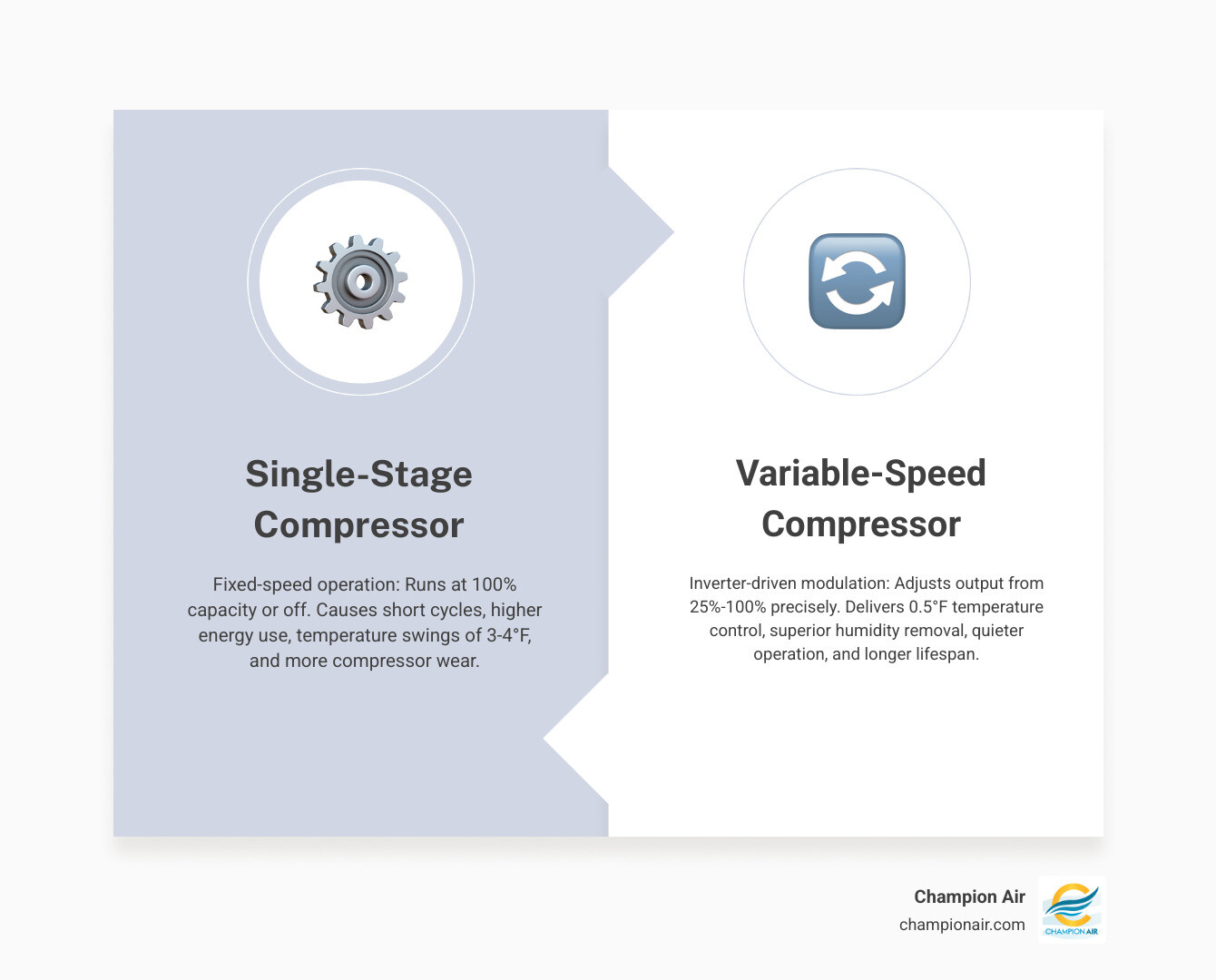
Understanding Compressor Technology: Single-Stage vs. Variable-Speed
To understand the core of the single stage vs variable speed ac comparison, we have to look at the "heart" of the system: the compressor. This component is responsible for circulating refrigerant and moving heat out of your home.
The Single-Stage "Workhorse"
A single-stage air conditioner operates on a fixed-capacity basis. It is either 100% on or 100% off. When your thermostat detects the temperature has risen above your set point, the system kicks on at full power. Once the home cools down, it shuts off completely. This "all-or-nothing" approach leads to frequent on/off cycles, also known as short-cycling.
The biggest drawback here is the startup wattage. An AC unit consumes significantly more energy during the first few seconds of startup than it does while running. Because single-stage units cycle so frequently, they hit those high-energy peaks dozens of times a day.
The Variable-Speed "Inverter"
Variable-speed systems utilize advanced inverter technology. Instead of a simple on/off switch, think of this as a dimmer switch or a gas pedal. A variable-speed compressor can modulate its output to as low as 25% or 30% of its total capacity.
Most of the time, your home doesn't actually need 100% of your AC’s cooling power. On a 90-degree morning in Mesa, a variable-speed unit might run at 35% capacity to maintain your comfort. It runs for longer periods but at a much lower power level, which is the secret to the Benefits of Variable Inverter Air Conditioner Technology. By avoiding the constant "hard starts" of a single-stage unit, these systems reduce mechanical wear and tear significantly.
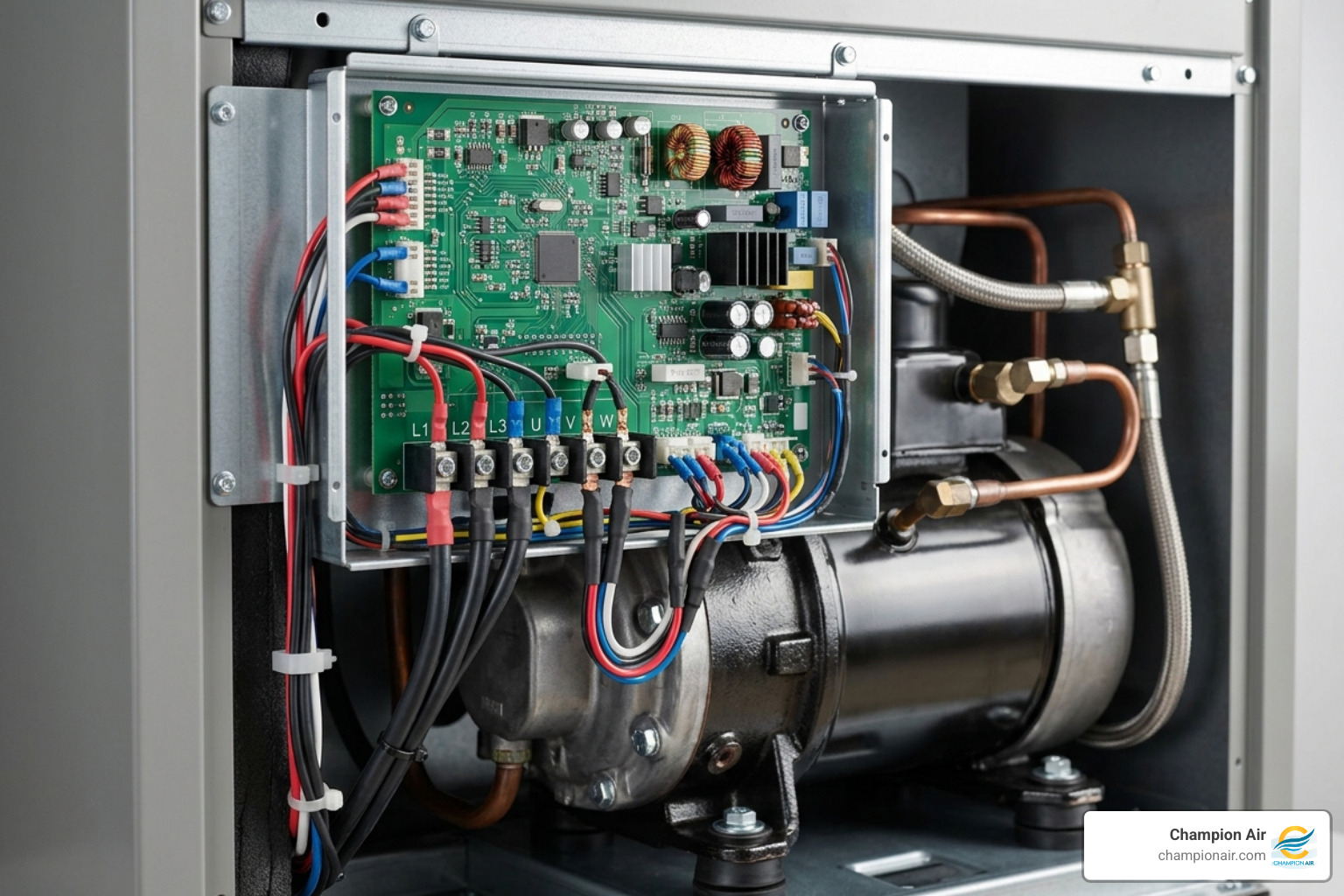
Single Stage vs Variable Speed AC Comparison: Performance and Efficiency
When we compare these systems side-by-side, the performance gap becomes clear. Variable-speed technology isn't just about saving a few dollars; it’s about a fundamentally different living experience.
| Performance Metric | Single-Stage | Variable-Speed |
|---|---|---|
| Temperature Control | Swings of 3–4°F | Within 0.5°F |
| Operational Range | 100% only | 25% to 100% |
| Airflow Consistency | Bursts of air | Steady, gentle flow |
| Refrigerant Type | R-410A / R-454B | R-454B (2025 Standard) |
The transition to R-454B refrigerant in May 2026 has standardized equipment across the industry, but how that refrigerant is utilized varies. Variable-speed units are designed to maximize the heat-transfer properties of these newer refrigerants by keeping them moving at precise speeds. You can learn more about how these metrics are calculated in our guide: Everything to Know About SEER Ratings.
Energy Efficiency in a Single Stage vs Variable Speed AC Comparison
Efficiency is measured by the SEER2 (Seasonal Energy Efficiency Ratio) rating. Single-stage units typically receive a 14 to 15 SEER2 rating, which meets federal minimums but doesn't go much further. Variable-speed units, however, frequently achieve ratings of 20 SEER2 or higher.
The math is simple: a 3-ton single-stage system (14.3 SEER2) uses approximately 5,540 kWh annually. A 20 SEER2 variable-speed system uses roughly 3,960 kWh. In the Phoenix Valley, where we run our AC almost year-round, that difference adds up. Homeowners can save approximately $200–$400 per year on electricity costs by making the switch. For more details on the financial breakdown, see How New HVAC Systems Save You Money.
Humidity Control: A Single Stage vs Variable Speed AC Comparison
While Arizona is known for "dry heat," the monsoon season and daily household activities (like showering and cooking) can raise indoor humidity levels. A single-stage AC cools the air so quickly that it often satisfies the thermostat before it has a chance to remove moisture. This can leave your home feeling "clammy."
Variable-speed air conditioners can remove up to 30% more humidity because they run longer, slower cycles. This constant air movement across the cooling coils pulls more moisture out of the air, keeping your indoor relative humidity within the ideal 50-55% range.
Why Arizona Homeowners Benefit from Variable Speed Technology
In cities like Scottsdale, Peoria, and Chandler, the environment places unique demands on HVAC equipment. We aren't just dealing with "warm" weather; we are dealing with extreme thermal loads.
Variable-speed technology solves three major Arizona problems:
- The Temperature Rollercoaster: Single-stage systems create "unsustained comfort." The house gets very cold, the unit shuts off, the desert heat seeps back in, and the house warms up 4 degrees before the unit kicks on again. Variable-speed units maintain temperatures within 0.5°F, eliminating those annoying swings.
- Hot Spots: Because variable-speed units run longer, they provide better air circulation. This helps push conditioned air into that one back bedroom or upstairs office that always seems to stay five degrees warmer than the rest of the house.
- System Longevity: The extreme heat in the Phoenix Valley already reduces the typical AC lifespan to 12-15 years for standard units. However, the expected lifespan of a variable-speed system, even in harsh climates, is 18–22 years because it avoids the stress of constant full-power starts.
If you're curious about how long your specific system might last in our climate, check out How Long Do Air Conditioners Last in Arizona. Many our clients find that the Why Choose Lennox Variable System is the most reliable way to combat the triple-digit heat.
Two-Stage Systems: The Practical Middle Ground
If a variable-speed system feels like more technology than you need, but you want better performance than a single-stage, a two-stage system is an excellent compromise.
Think of a two-stage unit as having a "low" and a "high" gear.
- Stage One (Low): Usually runs at 60-70% capacity. It handles about 80% of the cooling needs on moderate days.
- Stage Two (High): Kicks in at 100% capacity when the Arizona sun is at its peak or when you have a house full of guests.
Two-stage systems offer a significant jump in comfort over single-stage units by reducing short-cycling and providing better dehumidification, without the higher initial investment of a fully modulating variable-speed system.
Essential Installation Factors for High-Efficiency Upgrades
Upgrading to a high-efficiency variable-speed system isn't just a "plug and play" process. Because these systems are more technologically advanced, the installation quality is the biggest factor in the system’s lifespan.
When we perform an installation in homes from Buckeye to Queen Creek, we look at several critical factors:
- Ductwork Insulation: Variable-speed systems keep ducts cold for much longer periods. If your ducts are bare metal or poorly insulated, they can "sweat," leading to moisture issues in your walls or attic. We ensure your ductwork is ready for the upgrade.
- Static Pressure: A variable-speed blower motor (ECM) is designed to adjust its speed to maintain airflow. If your ducts are undersized, the motor will work too hard and wear out prematurely.
- Thermostat Compatibility: You cannot use a standard "on/off" thermostat with a variable-speed system and expect it to work. These systems require proprietary communicating thermostats to access the full range of modulation. While some homeowners miss their old third-party smart thermostats, the precision control of a communicating system is far superior.
- Matched Components: To achieve the rated SEER2 efficiency, the indoor evaporator coil and the outdoor condenser must be a matched pair.
Frequently Asked Questions
Which system has a longer expected lifespan?
Variable-speed systems generally last longer (18-22 years) compared to single-stage units (12-15 years). The primary reason is the reduction in "hard starts." A single-stage compressor is like a light switch being flicked on and off hundreds of times a week at full power. A variable-speed unit ramps up gently and stays running at low speeds, which creates far less mechanical stress. However, these systems do have more complex electronics, making annual professional maintenance absolutely vital.
Can I use my existing thermostat with a variable-speed unit?
In most cases, no. To get the 25% to 100% modulation that makes these systems worth the investment, you need a communicating thermostat designed by the manufacturer. Using a standard 24V universal thermostat often forces a variable-speed unit to operate like a two-stage unit, defeating the purpose of the advanced technology.
Is a variable-speed AC quieter than a single-stage model?
Yes, significantly. Single-stage units operate at noise levels between 70–76 decibels—about the volume of a vacuum cleaner. Variable-speed units operate between 50–65 decibels when running at lower speeds. This is quiet enough that you can easily hold a conversation right next to the outdoor unit, which is a major benefit for homes in neighborhoods with close property lines like those in Gilbert or Tempe.
Conclusion
Choosing between a single stage vs variable speed ac comparison isn't just about the equipment; it's about how you want to live in your home. If you plan on staying in your Arizona home for the next decade, the comfort, quiet, and energy savings of a variable-speed system are hard to beat. If you are looking for a reliable, budget-friendly replacement for a rental property or a short-term residence, a single-stage unit remains a "tried-and-true" workhorse.
At Champion Air, our licensed technicians specialize in helping homeowners across Scottsdale, Phoenix, Mesa, and the surrounding Valley cities find the perfect fit for their specific needs. We offer 24/7 emergency service with no overtime charges, ensuring you're never left in the heat.
Ready to see which system is right for your home? Schedule your high-efficiency AC consultation today and let us help you stay cool all summer long.
About the Author
Champion Air
More Articles
View All PostsKeep Reading
Related Articles


Ready to Get Started?
Whether you need a repair, maintenance, or a new installation, our expert team is here to help.