Why Your AC is Acting Up and How to Stop the Madness
Champion Air
Discover most common ac repairs and what causes them in Arizona heat. Fix electrical failures, airflow issues, warm air, and more—call Champion Air now!
Why Your AC is Acting Up and How to Stop the Madness
Why Arizona Homeowners Need to Know the Most Common AC Repairs and What Causes Them
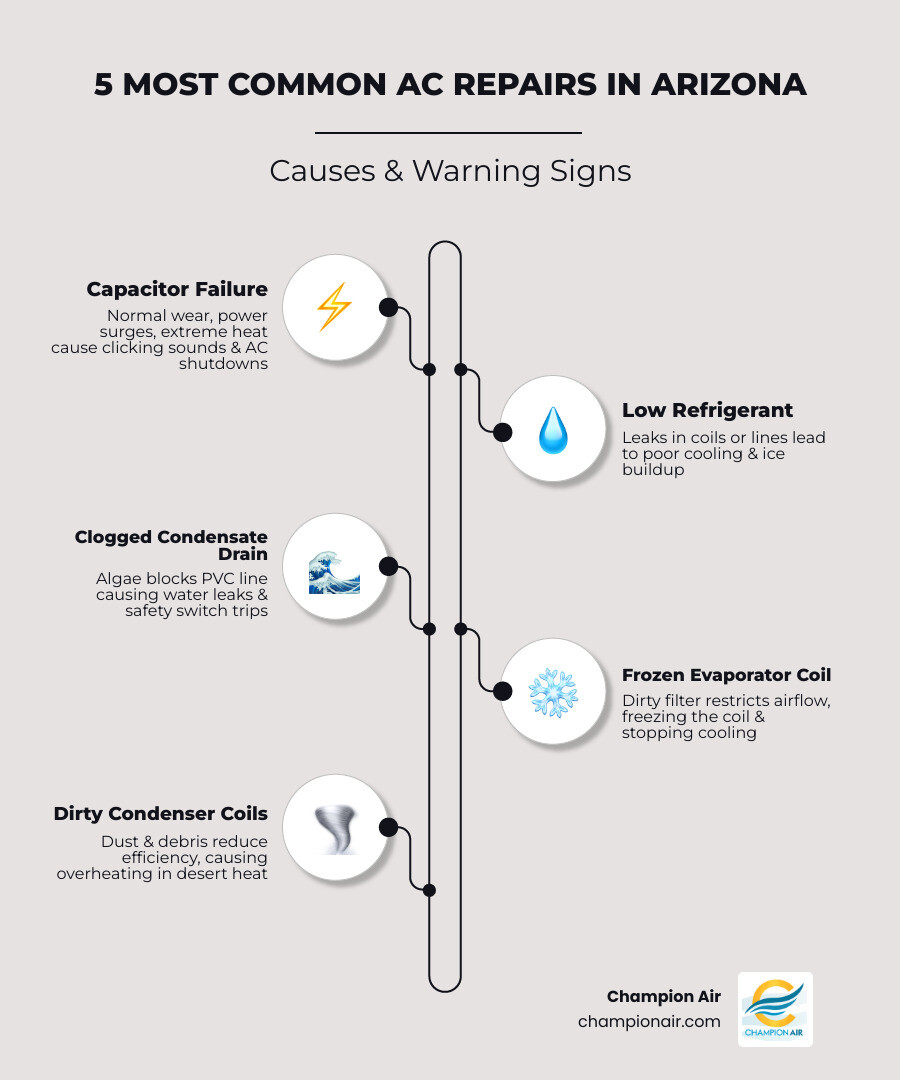
The most common ac repairs and what causes them in Arizona homes come down to a handful of recurring failures that HVAC technicians see every single summer:
| AC Repair | Most Common Cause |
|---|---|
| Capacitor failure | Normal wear, power surges, extreme heat |
| Low refrigerant | Leak in the evaporator coil or refrigerant lines |
| Clogged condensate drain | Algae growth blocking the PVC drain line |
| Frozen evaporator coil | Dirty air filter restricting airflow |
| Dirty condenser coils | Dust, debris, and lack of maintenance |
When your AC starts blowing warm air, running nonstop, or simply refusing to turn on during a Phoenix heat wave, one of these five issues is almost always the culprit. And with summer temperatures regularly pushing past 110°F here in Arizona, a struggling air conditioner isn't just uncomfortable — it's a genuine safety concern for your family.
Data backs this up. In one study tracking 242 real AC service calls, bad capacitors alone accounted for more than one in five repairs. Nine times out of ten, a central air unit that isn't cooling well is fighting a dirty filter. These aren't rare, mysterious failures — they're predictable, and most of them are preventable.
Knowing what's going wrong (and why) puts you in a much stronger position: you can catch small problems before they become expensive ones, and you'll know exactly when it's time to call a pro.
I'm Barry Farah, and leading one of Arizona's largest residential HVAC companies has given me a front-row seat to every type of AC failure this desert climate can produce — which is exactly why I put together this guide covering the most common ac repairs and what causes them. Let's break it all down so you can stop the madness before it starts.
The Most Common AC Repairs and What Causes Them
In our decades of serving the Valley, we’ve found that the vast majority of system breakdowns aren't caused by a single catastrophic event, but by gradual wear and tear that goes unnoticed. It is a startling industry fact that 9 out of 10 central air units fail simply because of a dirty filter.
When a filter is neglected, it acts like a solid barrier. This forces the blower motor to work twice as hard to pull air through the system, leading to overheating and premature motor failure. In the dusty environments of Scottsdale and Mesa, filters can become "impacted" much faster than the manufacturer's label suggests.
If you aren't sure if your filter is the problem, try the "light test." Hold your filter up to a bright light source. If the light can't pass through the mesh, air certainly can't either. This simple check can prevent the need for more intensive 5 Signs You Need HVAC Service down the road.
Electrical Failures: The Most Common AC Repairs and What Causes Them
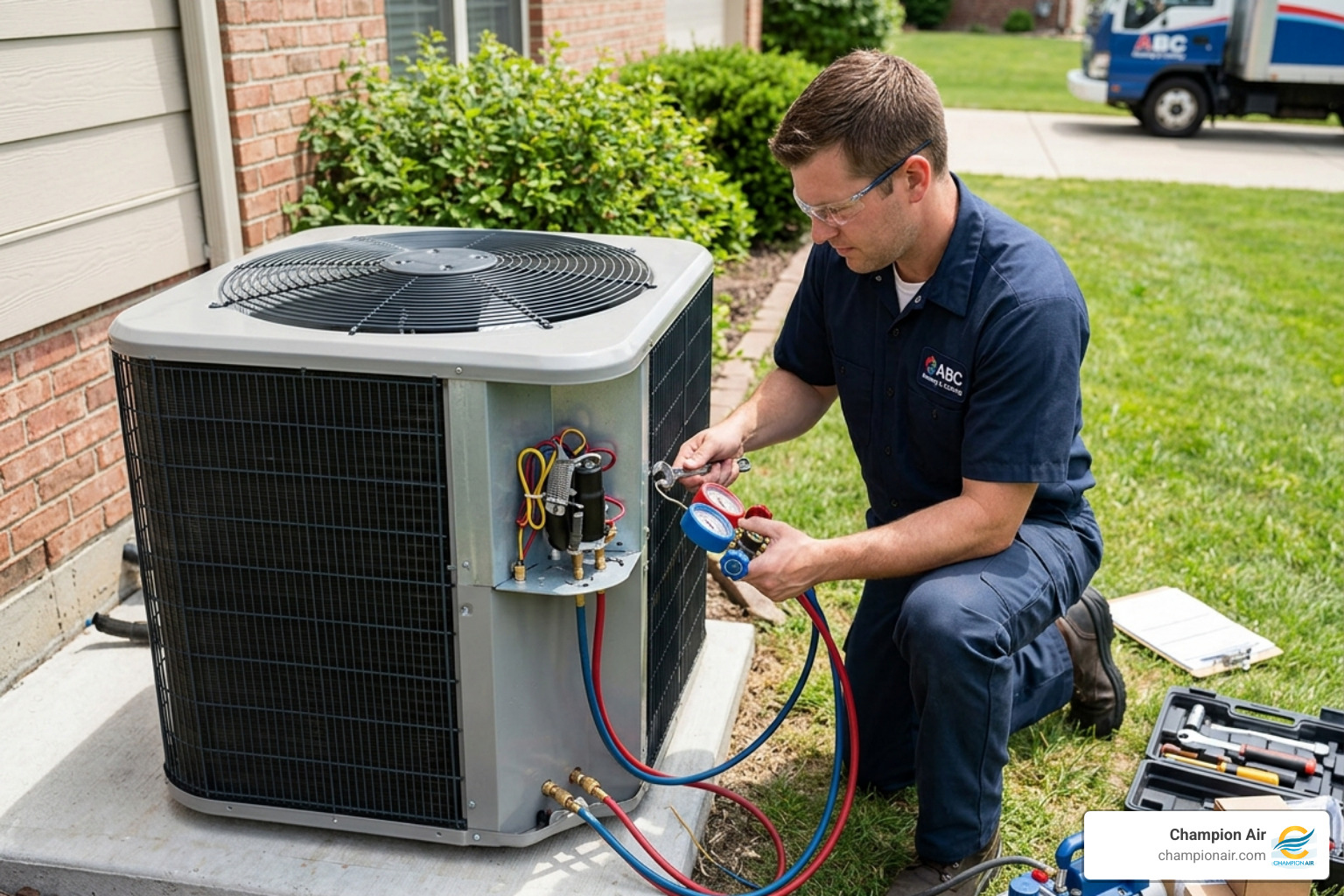
If your AC system is humming but the fan isn't spinning, or if you hear a distinct "clicking" sound when the unit tries to start, you are likely dealing with a failed capacitor.
Capacitors are small, cylindrical components that act like temporary batteries. They provide the high-voltage "jolt" needed to start the compressor and the fan motors. In Arizona, the extreme heat of May 2026 can cause these components to bulge, leak oil, or simply lose their ability to hold a charge.
Our technicians often find that a failing capacitor puts immense stress on the rest of the electrical system. If the capacitor can't help the motor get up to speed, the motor will continue to draw high amperage, which can lead to burnt wiring or a seized motor. If you notice your fan is stationary even though you hear the unit trying to kick on, check out our guide on Why Is My AC Fan Not Spinning? to understand the mechanical risks involved.
Airflow Obstructions: The Most Common AC Repairs and What Causes Them
One of the most confusing sights for a homeowner is seeing a block of ice on their air conditioner in the middle of a 110-degree July afternoon. This is almost always caused by an airflow obstruction or a refrigerant leak.
The evaporator coil (the part of the system inside your home) relies on a steady stream of warm return air to keep the refrigerant inside from getting too cold. If a dirty filter or blocked vents stop that airflow, the coil temperature drops below freezing. Any moisture in the air then freezes onto the coil, creating an insulating layer of ice that prevents any further cooling.
Low refrigerant levels cause a similar problem. When the "charge" is low, the pressure inside the coil drops, which in turn drops the temperature. It is important to remember that an AC system is a closed loop; it should never "consume" refrigerant. If you are low, you have a leak. Topping it off is a temporary fix that doesn't address the root cause, which is often a pinhole leak caused by formicary corrosion. You can learn more about identifying these leaks in our article on Signs Your Air Conditioner Is Low in Freon.
Why Is My Air Conditioner Blowing Warm Air?
Few things are more frustrating than feeling lukewarm air drifting from your vents when you need a cold blast. When we investigate the most common ac repairs and what causes them, warm air usually points to a failure in the outdoor condenser unit.
The condenser's job is to release the heat collected from inside your home. If the outdoor fan motor has failed or the condenser coils are caked in desert dust and "haboob" silt, the heat has nowhere to go. This causes the refrigerant to stay warm, and eventually, the compressor—the "heart" of your system—may shut down to protect itself from overheating.
Another common culprit is a failing compressor valve. If the compressor cannot effectively pump and compress the refrigerant, the heat exchange process fails entirely. Because the compressor is a complex and vital component, diagnosing it requires professional tools to check "locked rotor amps" and winding resistance. If your system has stopped cooling effectively, you can start troubleshooting by reading Why Is My AC Not Cooling? or dive deeper into the mechanics with our explanation of What Does an AC Condenser Do?.
Drainage and Electrical Safety Hazards
In the humid parts of the Arizona monsoon season, your AC doesn't just cool the air—it dehumidifies it. This moisture collects in a drain pan and exits through a PVC condensate line.
However, algae and mold love the dark, damp environment of that drain line. Over time, a "slug" of algae can completely block the pipe. When this happens, the water has nowhere to go but back into your home. Modern systems in Phoenix are required to have an "SS2" safety switch or a float switch. These devices detect rising water and immediately cut power to the system to prevent water damage to your ceilings and floors.
If your AC suddenly dies and your thermostat screen goes blank, a clogged drain is a very likely reason. We always recommend a Guide to Fixing AC Condensate Drain Line issues before they lead to a full system shutdown. You can also learn about the "silent guardian" of your HVAC system in our post on What Does an AC Float Switch Do?.
On the electrical side, if your system keeps tripping the circuit breaker, do not keep resetting it! A tripped breaker is a safety warning that a component is drawing too much power or has a "short to ground." This could be a sign of a failing compressor or a motor winding that has come into contact with the unit's metal casing. Persistently resetting the breaker can lead to electrical fires or catastrophic equipment damage. For more on this, see Why Does My AC Keep Tripping the Breaker?.
When to Repair vs. Replace Your Arizona AC Unit
In the extreme heat of cities like Peoria and Chandler, an AC unit works much harder than it would in a milder climate. Most systems have a lifespan of 10 to 15 years. As we reach May 2026, many homeowners are facing the difficult decision of whether to keep repairing an aging unit or invest in a new one.
| Factor | Repair It If... | Replace It If... |
|---|---|---|
| Age | Unit is under 10 years old | Unit is over 12-15 years old |
| Refrigerant Type | Uses modern R-410A | Uses phased-out R-22 (Freon) |
| Repair History | First major issue in years | Frequent breakdowns every summer |
| Efficiency | Utility bills are stable | Bills are skyrocketing despite repairs |
| Component Failure | Capacitor or fan motor failure | Compressor or evaporator coil failure |
One issue "nobody talks about" is improper system sizing. If your unit is too large for your home, it will "short cycle," turning on and off rapidly. This prevents the system from properly dehumidifying your home and puts massive strain on the blower motor and compressor. Conversely, a unit that is too small will run 24/7, never reaching the set temperature and burning out prematurely.
If you're trying to figure out if your system is still performing at its peak, our guide on How to Troubleshoot Your HVAC System can help you evaluate your current setup.
Frequently Asked Questions about AC Failures
Why is my thermostat screen blank?
A blank thermostat screen is often a symptom, not the problem. While it could be dead batteries, it is frequently caused by a triggered safety switch. When your condensate drain line clogs and water backs up, the float switch cuts power to the thermostat to stop the cooling cycle and prevent further water overflow. If you see moisture around your indoor unit, read What to Do When Water Drips From Your Air Conditioner.
What do strange AC noises mean?
Your AC should run with a steady, predictable hum. If you start hearing new sounds, your system is trying to tell you something:
- Buzzing: Often indicates an electrical issue, such as a failing contactor or a motor that is struggling to start. Why Is My AC Making a Buzzing Noise?
- Hissing: This is usually the sound of refrigerant gas escaping through a leak in the lines or the evaporator coil. Why Is My AC Making a Hissing Noise?
- Squealing or Grinding: This typically points to failing bearings in the blower motor or a worn-out fan belt. AC Making Squealing Noise
How often should I change my filters in Phoenix?
In the Phoenix Valley, the standard "every three months" advice doesn't always apply. Between seasonal dust storms (haboobs), pet dander, and the fact that our systems run almost constantly for six months of the year, we recommend checking your filters monthly. If you live in high-dust areas like Buckeye or Queen Creek, you may need a fresh filter every 30 days to keep your system breathing easily. For professional help with maintenance, consider our AC Repair Service Phoenix.
Conclusion
Understanding the most common ac repairs and what causes them is the first step toward a cooler, more comfortable home. Whether it’s a simple filter change or a complex capacitor replacement, being proactive can save you from a middle-of-the-night emergency in the Arizona heat.
At Champion Air, we are dedicated to keeping families in Scottsdale, Phoenix, Mesa, and throughout the Valley comfortable all year long. We specialize in 24/7 emergency repairs with no overtime charges, ensuring that when the madness of a broken AC hits, you have a partner you can trust. From Anthem to Tempe, our award-winning technicians are ready to provide same-day service and comprehensive maintenance plans for all major brands.
Don't let a small mechanical hiccup turn into a total system failure. If your air conditioner is acting up, reach out to us today to explore our full range of Air Conditioning Services and get your home back to the perfect temperature.
About the Author
Champion Air
More Articles
View All PostsKeep Reading
Related Articles


Ready to Get Started?
Whether you need a repair, maintenance, or a new installation, our expert team is here to help.