Don't Get Cooked by Scheduling Your Arizona Cooling Tune Ups on Time
Champion Air
Learn how often should you service your ac in Arizona: bi-annual tune-ups for desert heat, dust storms & max reliability in Phoenix!
Don't Get Cooked by Scheduling Your Arizona Cooling Tune Ups on Time
How Often Should You Service Your AC in Arizona (And Why It Matters More Here)
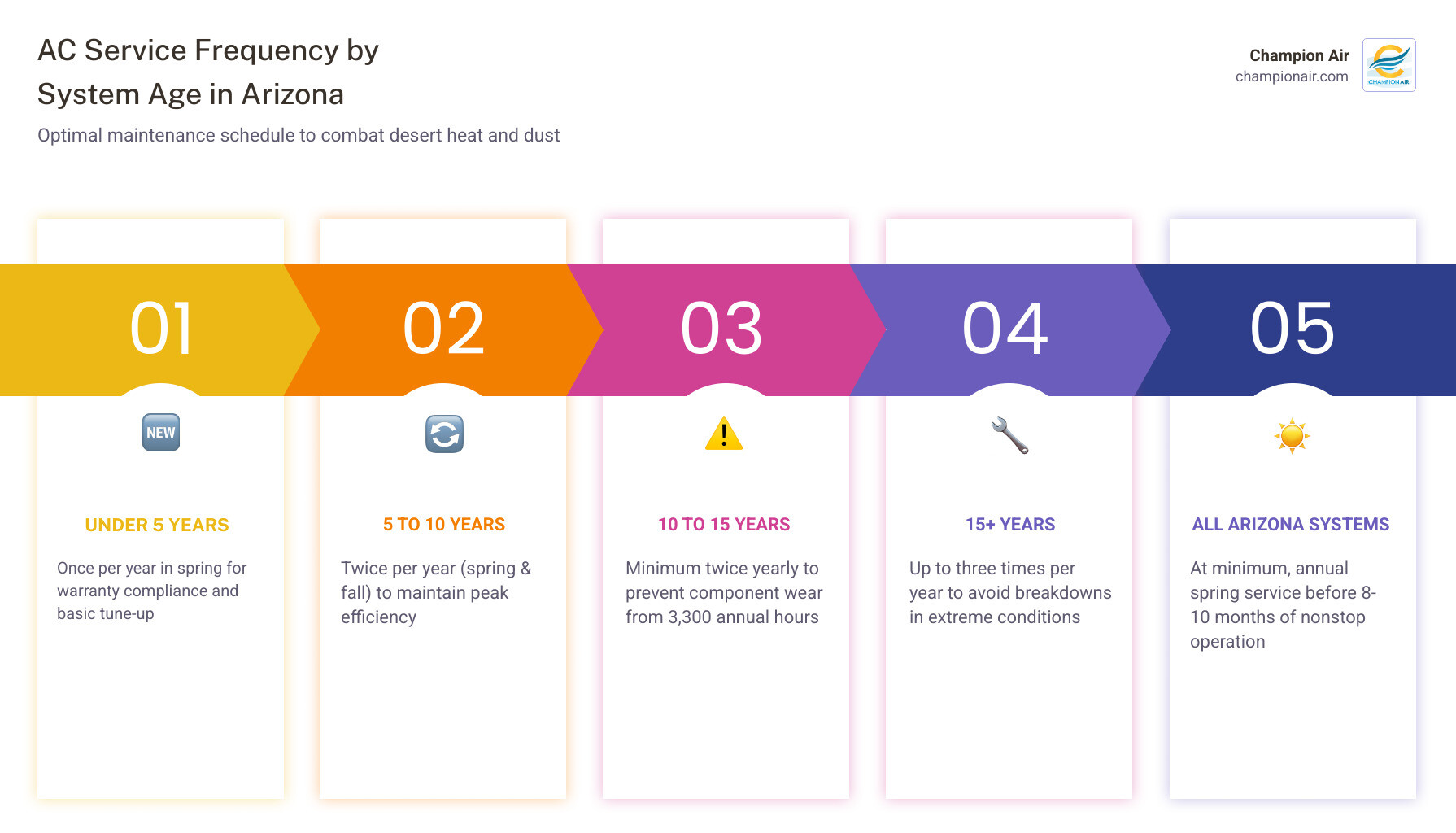
How often should you service your AC in Arizona depends on your system's age, but here's the short answer most homeowners need:
| System Age | Recommended Service Frequency |
|---|---|
| Under 5 years old | Once per year (spring) |
| 5 to 10 years old | Twice per year (spring and fall) |
| 10 to 15 years old | Twice per year (minimum) |
| 15+ years old | Up to three times per year |
At a minimum, every Arizona homeowner should schedule a professional AC tune-up once a year before summer. But because Arizona AC systems run 8 to 10 months annually — enduring triple-digit heat, fine desert dust, and monsoon humidity — twice a year is the standard most local HVAC professionals recommend.
That's a very different answer than what you'd hear in Minnesota or Ohio, and for good reason. An AC unit in Phoenix operates roughly 3,300 hours per year. To put that in perspective, that's the mechanical equivalent of driving a car over 200,000 miles. No one skips oil changes on a car with that kind of mileage.
I'm Barry Farah, and after years of leading one of Arizona's largest residential HVAC companies, I've seen what happens when homeowners follow generic national advice about how often should you service your AC in Arizona — and pay the price in emergency repairs and shortened system lifespans. In the sections below, I'll walk you through exactly what Arizona's climate demands from your cooling system and how to build a maintenance schedule that keeps your home comfortable all year long.
Why the Arizona Desert Climate Accelerates HVAC Wear and Tear
Living in the Sonoran Desert is a unique experience, but for your air conditioner, it’s a grueling endurance test. While a system in the Midwest might get a break for six months out of the year, our units in cities like Scottsdale and Mesa are the "marathon runners" of the HVAC world.
The primary culprit is our relentless triple-digit heat streaks. In the Phoenix Valley, it isn't uncommon to see temperatures stay above 110°F for weeks at a time. During these periods, your AC doesn't just run; it works at its absolute mechanical limit. This constant operation leads to roughly 3,300 operating hours annually. When a machine runs that much, parts like capacitors, fan motors, and compressors wear down significantly faster than the national average.
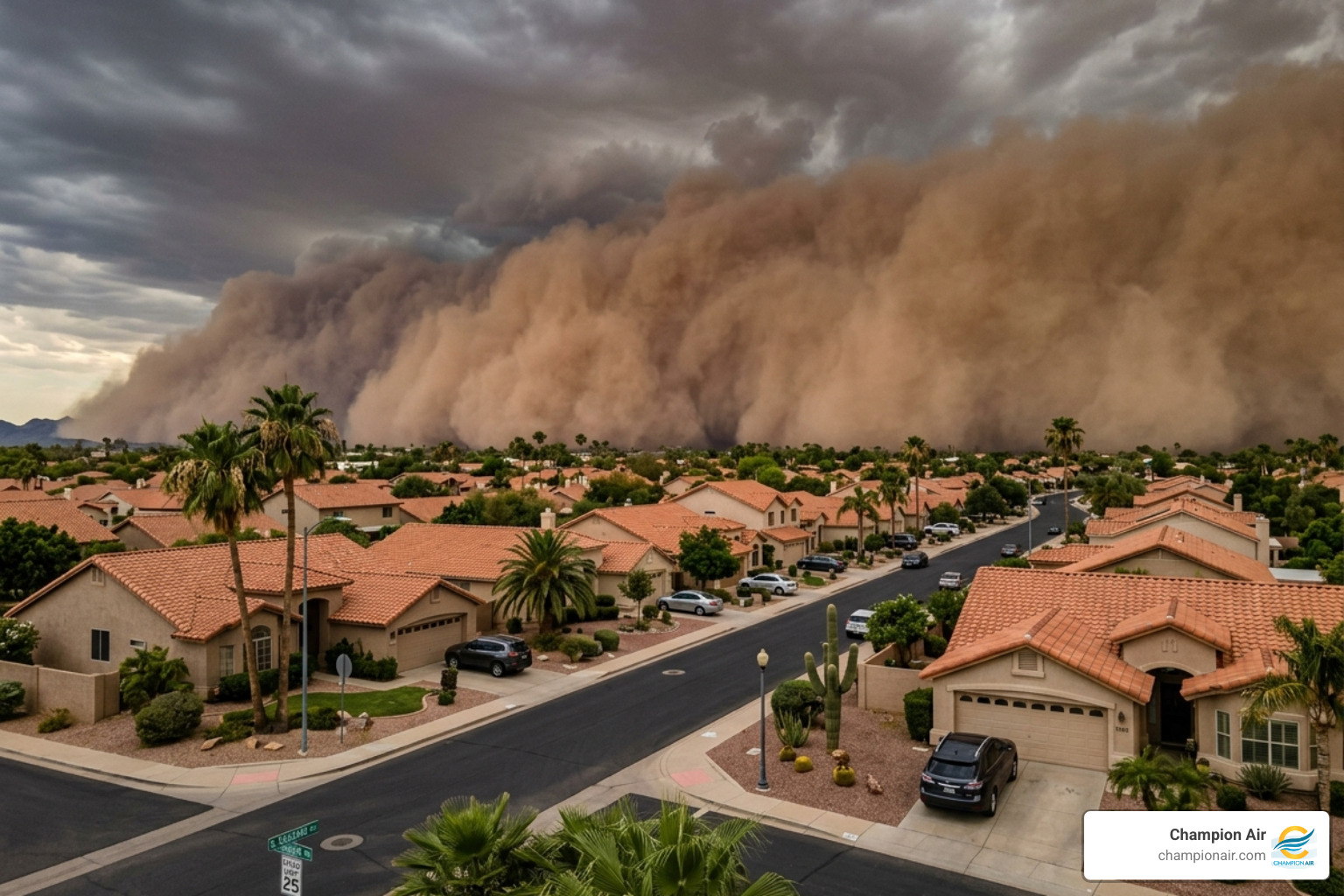
Furthermore, we have to contend with fine desert dust and the infamous "haboobs." These massive dust storms sandblast your outdoor condenser unit, clogging the delicate fins and coating the coils in a layer of grime that acts like a thermal blanket. This prevents the system from releasing heat, forcing it to work even harder. Then comes the monsoon humidity, which can lead to "dirty sock syndrome" or mold growth in the drainage systems if not properly maintained. Because of these factors, understanding How Long Do Air Conditioners Last in Arizona? is vital for every homeowner.
Why the standard answer for how often should you service your AC in Arizona changes in the desert
If you look at a manual from a manufacturer based in a cooler climate, it might suggest a single annual check-up is plenty. In Arizona, that's a risky gamble. Nationally, AC units might last 15 to 20 years. Here in the heat of Phoenix and Surprise, that lifespan often drops to just 8 to 12 years due to the extreme strain.
Think of your HVAC system as the "mechanical heart" of your home. If you were driving a car 200,000 miles every single year, you wouldn't wait a year to change the oil. Component degradation happens in real-time under the Arizona sun. UV rays can even damage the outer casings and electrical wiring of rooftop units. Following 9 Tips for Extending the Lifespan of Your Air Conditioner is essential to combat this environmental assault.
How Often Should You Service Your AC in Arizona for Maximum Reliability?
For maximum reliability, we recommend a bi-annual service schedule. This "twice-a-year" rhythm aligns with our two primary seasons: the brutal cooling season and the shorter, but still important, heating season.
The first visit should be a spring cooling prep. This happens before the first 100-degree day hits. The second visit is a fall transition. Many homeowners forget that after a long summer of running 24/7, the system needs a "reset." A fall tune-up clears out the summer's dust and ensures the heating components are safe for the winter. This proactive approach is the best way to determine How Often Should You Schedule HVAC Maintenance? for your specific needs.
Determining how often should you service your AC in Arizona based on system age
The age of your unit is a major factor in your maintenance strategy.
- Units under 5 years old: A single, thorough spring tune-up is usually sufficient to maintain efficiency and keep your manufacturer's warranty valid. Most warranties actually require proof of annual professional service to remain in effect.
- Systems aged 5 to 10 years: This is the "middle age" for an Arizona AC. Parts start to show wear. Bi-annual visits are highly recommended to catch failing capacitors or small refrigerant leaks before they turn into a mid-July breakdown.
- Systems aged 10+ years: At this stage, your unit is a senior citizen. It may require two or even three visits a year to keep it limping through the peak heat. Regular checks are the only way to avoid a $10,000 surprise replacement.
Investing in Why HVAC Maintenance Agreements Are Important can help automate this schedule and often provides priority service when you need it most.
The impact of dust storms and monsoons on cleaning frequency
Arizona's weather isn't just hot; it's dirty. When a haboob rolls through Gilbert or Chandler, it deposits a layer of caliche dust into your outdoor unit. This dust is fine and powdery, specifically designed (it seems) to clog condenser coils.
If your coils are dirty, your system can lose up to 30% of its efficiency. That means you're paying 30% more on your electric bill for less cooling. Professional cleaning during a tune-up involves chemically washing these coils to restore airflow. Without this, your compressor—the most expensive part of the system—is at risk of overheating. Check out our guide on Prepping Your HVAC System for Summer for more on handling desert debris.
The Best Time of Year to Schedule Your Phoenix Area Tune-Up
Timing is everything. You don't want to realize your AC is broken on the first day it hits 110°F. By then, every HVAC company in the Valley is booked out for days.
The "Golden Window" for spring maintenance is February through April. Scheduling during these months ensures your system is ready before the heat arrives and gives you the flexibility to fix any discovered issues without the stress of a heatwave. For the fall, aim for October and November. This allows us to clear out the summer's dust and prep your heat pump or furnace for the chilly desert nights. By avoiding the peak summer rush, you get a more thorough inspection and better scheduling options. This is one of the top Reasons to Schedule a Spring AC Tune-Up.
Benefits of a Spring AC Tune-Up
A spring tune-up isn't just a "look-over." It's an optimization process. We look for:
- Refrigerant Leak Detection: Low refrigerant is almost always a sign of a leak, not just "usage." Catching it early prevents the system from freezing up.
- Capacitor Testing: Capacitors are the most common fail point in Arizona. They hate heat. We test them to see if they are within the manufacturer's safety range.
- Efficiency Calibration: A thermostat error of just 2 degrees can waste hundreds of dollars a year in Phoenix. We calibrate your sensors to ensure you aren't overpaying.
Understanding The Importance of a Seasonal HVAC Tune-Up can save you thousands in the long run.
Professional Maintenance vs. DIY: What Homeowners Can Handle
We often get asked if homeowners can just "do it themselves." While there are critical tasks you should handle, they don't replace a professional's eyes.
| Task | DIY | Professional |
|---|---|---|
| Change Air Filters | Yes (Every 30 days) | Included |
| Clear Debris around Unit | Yes (2-foot clearance) | Included |
| Clean Condenser Coils | No (Requires chemicals) | Yes |
| Check Refrigerant Levels | No (Requires EPA license) | Yes |
| Tighten Electrical Connections | No (Safety risk) | Yes |
| Flush Condensate Drain | Limited | Yes (Deep flush) |
Homeowners should focus on the "lungs" of the system: the air filters. During a peak Phoenix summer, you should check your filters every 30 days. If you have pets or live near new construction in areas like Buckeye or Queen Creek, you might need to change them even more often. Keeping the area around your outdoor unit clear of weeds and debris is also a great DIY task. For everything else, you'll want the AC Maintenance & Tune-Up in Phoenix, AZ professionals.
Critical tasks included in a professional inspection
When we perform a tune-up, we are looking at things the average homeowner can't see. We tighten loose electrical connections—which are responsible for 60% of compressor failures. We flush the condensate drain line to prevent water damage from algae growth (a common issue during monsoon season). We also perform a full safety check on all mechanical parts. This level of detail is why our HVAC Maintenance Plans are so popular among savvy Valley residents.
Warning Signs Your AC Needs Immediate Service Before a Breakdown
Sometimes, your AC will give you "distress signals" before it completely quits. If you notice any of the following, don't wait for your scheduled tune-up—call us immediately:
- Weak or Warm Airflow: If the air coming out of your vents feels like a gentle breeze instead of a strong gust, or if it isn't cold, your system is struggling.
- Unusual Noises: Grinding, squealing, or banging sounds are never a good sign. They usually indicate a failing motor or a loose belt.
- Musty Odors: This "dirty sock smell" often means mold or bacteria is growing on your evaporator coils or in your ductwork.
- Short-Cycling: If your AC turns on and off every few minutes, it’s putting massive strain on the compressor and wasting energy.
- Frozen Lines: If you see ice on the copper lines outside, your system has a major airflow issue or a refrigerant leak.
Ignoring these signs is one of the quickest ways to end up needing a total system replacement. Again, these are all great Reasons to Schedule a Spring AC Tune-Up before the symptoms become a crisis.
Frequently Asked Questions About Arizona AC Service
How often should I change my air filters during a Phoenix summer?
In Arizona, the standard "90-day" rule for filters doesn't apply. You should check your filter every month. If it looks gray or "fuzzy," replace it. During the peak of July and August, or after a major dust storm, you may find yourself replacing it every 30 to 45 days. This is especially true if you have pets that shed or family members with allergies.
Can skipping one year of maintenance really hurt my system?
Yes. Skipping even one year can lead to a 5-20% loss in efficiency. In the desert, a neglected system can burn up to 30% more energy just to keep your home at 78 degrees. More importantly, small issues like a worn-out $50 part can cause a "chain reaction" that destroys a $2,000 compressor. Maintenance is also a requirement for most warranties; skipping it could leave you paying full price for a repair that should have been covered.
How long do air conditioners typically last in Scottsdale and Mesa?
Due to the extreme heat-induced stress, the average lifespan in the Phoenix Valley is 8 to 12 years. However, with consistent bi-annual maintenance, some homeowners are able to stretch that to 15 years. Without maintenance, it isn't uncommon to see systems fail in as little as 6 or 7 years. You can read more about local expectations in our guide: How Long Do Air Conditioners Last in Arizona?
Conclusion
Living in the Arizona desert means your air conditioner isn't just a luxury—it's a survival tool. Because our environment is so much harsher than the rest of the country, the answer to how often should you service your AC in Arizona is clear: at least once a year, but ideally twice.
At Champion Air, we specialize in keeping Phoenix Valley homes cool and comfortable through the most extreme conditions. Whether you are in Scottsdale, Mesa, or anywhere in between, our licensed technicians are ready to provide the expert maintenance your system needs to survive the summer. Don't wait for the heat to catch you off guard. Schedule your professional AC maintenance in Phoenix today and enjoy peace of mind all summer long.
About the Author
Champion Air
More Articles
View All PostsKeep Reading
Related Articles


Ready to Get Started?
Whether you need a repair, maintenance, or a new installation, our expert team is here to help.