Arizona AC Filter Frequency: Don't Let the Dust Settle
Champion Air
Learn how often should you change your ac filter in Arizona to combat dust, haboobs & heat. Save energy & boost IAQ—expert tips inside!
Arizona AC Filter Frequency: Don't Let the Dust Settle
Why How Often Should You Change Your AC Filter in Arizona Matters More Than You Think
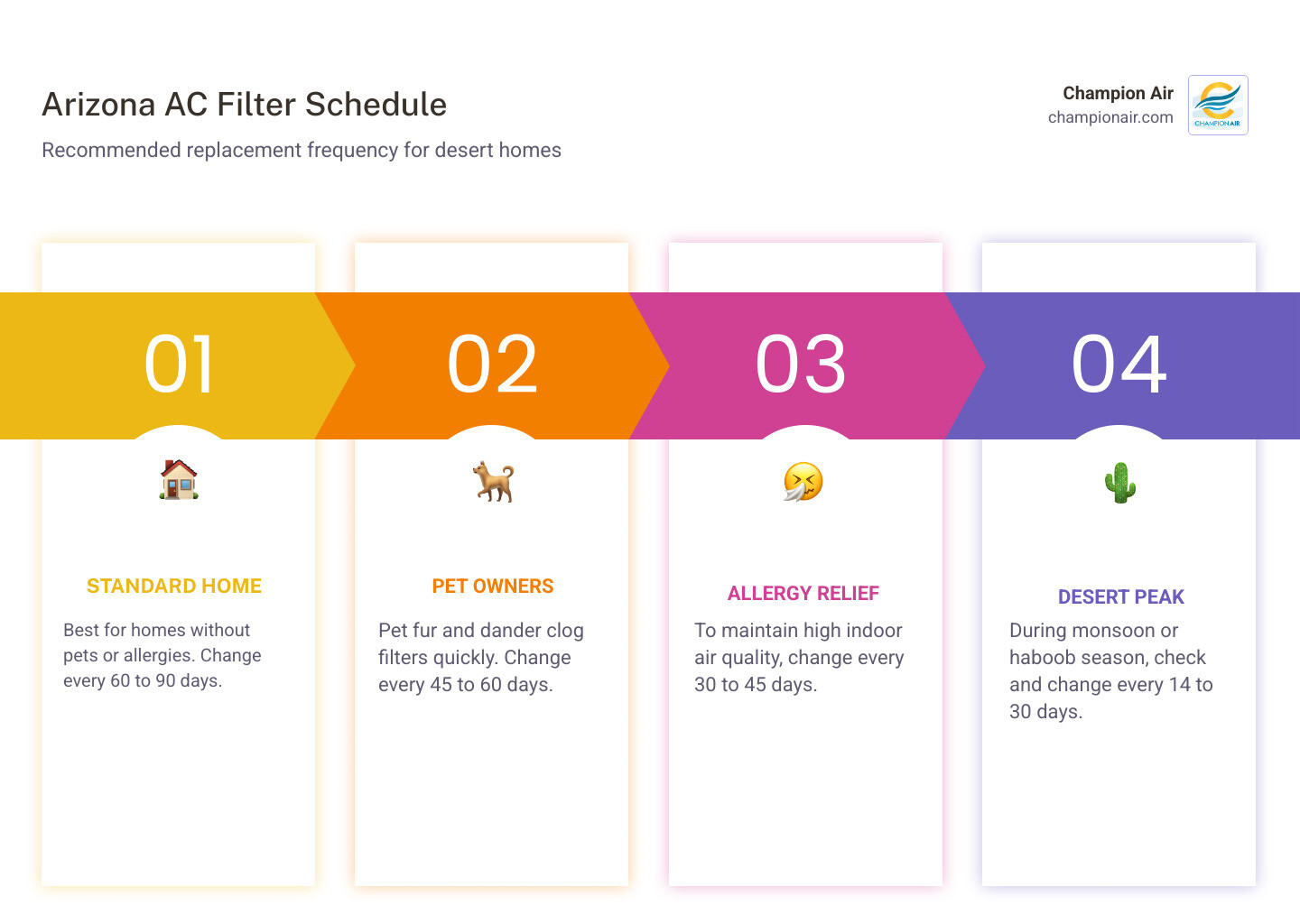
How often should you change your ac filter in arizona depends on your specific home — but here's the fast answer most Valley homeowners need:
| Household Situation | Recommended Change Frequency |
|---|---|
| No pets, no allergies, low dust | Every 60–90 days (90 days maximum) |
| One pet or mild allergies | Every 60 days |
| Multiple pets or allergy sufferers | Every 30–45 days |
| Near construction or heavy dust | Every 30 days |
| During monsoon season or after a haboob | Check every 2 weeks |
The short version: every 30 days is the safest rule of thumb for most Arizona homes, especially from May through October when your AC may run 12–16 hours a day.
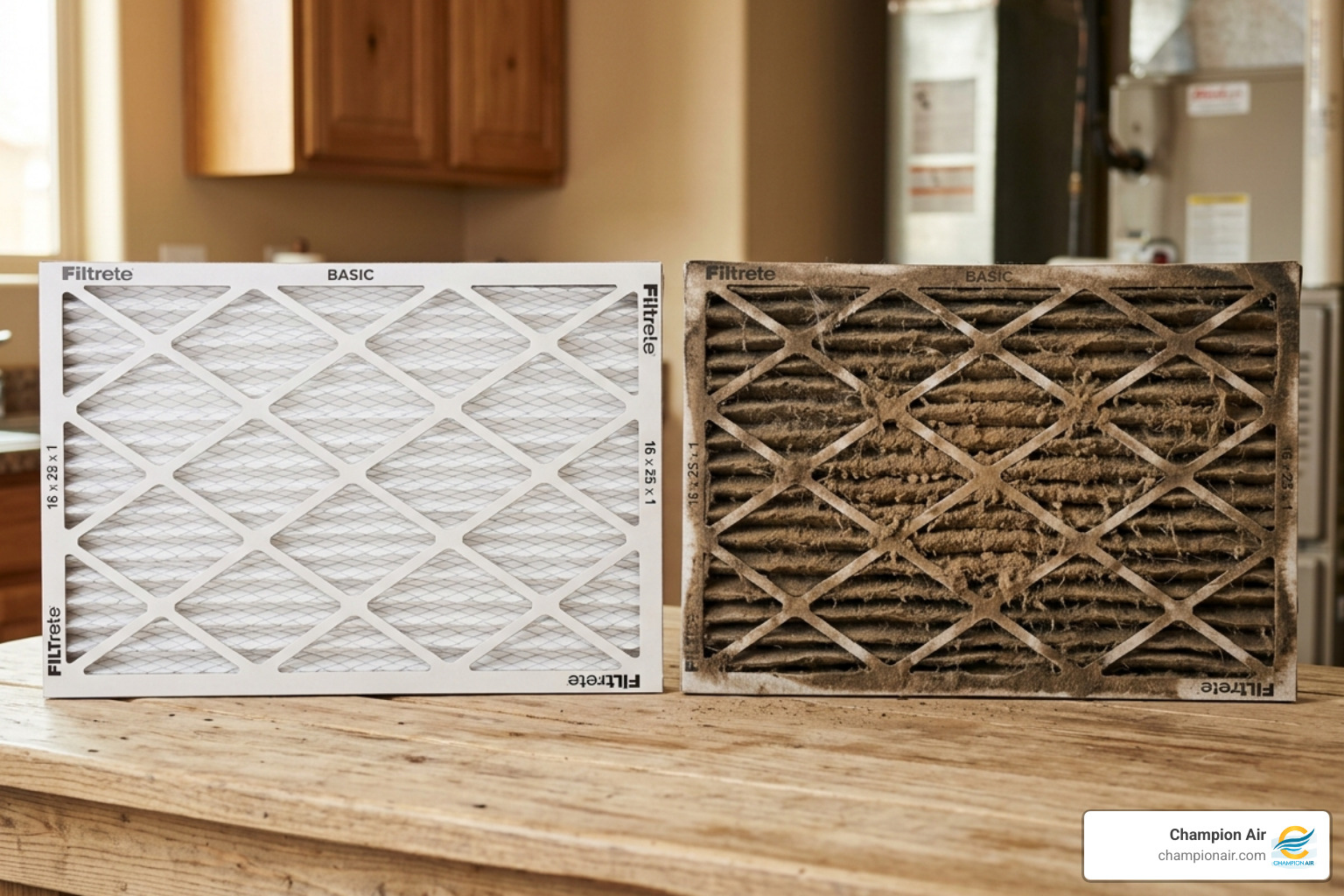
If you've ever pulled a filter out of your HVAC unit and found what looks like a solid gray mat of desert grit, you already know Arizona is not a normal place to own an air conditioner. The dust is relentless. The heat is unforgiving. And your AC works harder here than almost anywhere else in the country — often nonstop from spring straight through fall.
The national guideline printed on most filter packaging says to change every 90 days. In the Phoenix Valley, that advice can leave your system struggling — and your energy bill quietly climbing. A clogged filter forces your HVAC system to work 5–15% harder, according to the U.S. Department of Energy. In a desert climate where triple-digit days are routine and your unit never really gets a break, that extra strain adds up fast.
This guide cuts through the generic advice and gives Arizona homeowners a clear, honest answer to one of the most common HVAC questions we hear.
I'm Barry Farah, and leading Arizona's largest Lennox family-owned residential HVAC replacement company has given me a front-row seat to what happens when filter maintenance gets ignored in our desert climate — understanding how often should you change your ac filter in arizona is one of the simplest ways homeowners can protect both their system and their family's comfort. Read on for everything you need to know to stay ahead of the dust.
How Often Should You Change Your AC Filter in Arizona?
In the Valley of the Sun, we don't just use our air conditioners; we rely on them for survival. During the peak of summer in May 2026, outdoor temperatures frequently exceed 100°F before noon. This extreme heat forces residential HVAC systems to run for 12 to 16 hours every single day.
When a system runs that often, it is constantly pulling air through the filter. Think of your filter like a net: the more air that passes through, the more "fish" (dust, hair, and debris) it catches. In Arizona, the "30-day rule" is the gold standard. While the CDC and EPA suggest a window of 1 to 3 months, the high volume of desert dust and the sheer number of hours our units operate mean that for most of us in Phoenix, Mesa, or Scottsdale, 30 days is the sweet spot.
Why Changing Air Filters Is So Important cannot be overstated. Beyond just keeping the air clean, the filter is the primary line of defense for your expensive HVAC equipment. A dirty filter is like trying to run a marathon while breathing through a thick wool blanket; your heart (the compressor) has to work significantly harder to get the oxygen (airflow) it needs.
Environmental Factors Impacting Filter Life in the Valley
Arizona’s environment is unique, and our maintenance schedules must reflect that. We face a "triple threat" of environmental factors that homeowners in other states simply don't deal with.
- Monsoon Season and Haboobs: Between June and September, massive dust storms known as haboobs can roll through the Valley. These storms carry fine silt and sand that can saturate an air filter in a single afternoon. Even if you just changed your filter last week, a major dust storm is a signal to check it again immediately. Knowing how to protect your HVAC system during a dust storm is vital for every resident.
- Desert Grit: Our soil is fine and easily airborne. Even with well-sealed windows and doors, this "desert grit" finds its way inside. It circulates through your home and eventually ends up trapped in your return air vents.
- Construction Debris: If you live in rapidly growing areas like Queen Creek, Buckeye, or Surprise, you likely have active construction nearby. Cement dust, drywall particles, and stirred-up earth from heavy machinery are much heavier than standard household dust and will clog a filter at an accelerated rate.
Choosing the Right Filter and MERV Rating for Desert Homes
Understanding MERV Ratings for How Often Should You Change Your AC Filter in Arizona
MERV stands for Minimum Efficiency Reporting Value. It’s a scale from 1 to 16 that measures how effectively a filter traps particles. For most Arizona homes, MERV 8 to 11 is the "sweet spot."
- Fiberglass Filters (MERV 1–4): These are the thin, blue, see-through filters. They are designed to catch large "tumbleweeds" of pet hair to protect the motor, but they do almost nothing for air quality. We generally recommend avoiding these in the desert.
- Pleated Filters (MERV 8–11): These provide a great balance. They catch dust, pollen, and mold spores without putting too much strain on your blower motor.
- High-Efficiency Filters (MERV 13+): While these offer superior filtration, they can be too restrictive for older HVAC units. If the filter is too thick, it can actually cause the system to overheat or freeze up because it can't pull enough air through.
Exploring indoor air quality solutions can help you find the right balance for your specific unit. If you want to boost your indoor air quality without damaging your AC, a professional can help you determine the highest MERV rating your system can safely handle.
Household Variables and How Often Should You Change Your AC Filter in Arizona
Your lifestyle dictates your filter's lifespan just as much as the weather does.
- Pets: Furry friends are tough on HVAC systems. Pet dander and shedding hair act like glue for desert dust, creating a thick mat on your filter. If you have multiple pets, you should be on a strict 30-day replacement cycle.
- Respiratory Health: For those with asthma or severe allergies, maintaining pristine air is a priority. Following 6 tips to improve your indoor air quality and learning how to monitor your indoor air quality can help you breathe easier, but frequent filter changes are the foundation of any clean-air strategy.
Signs Your Filter Needs Immediate Replacement
Sometimes the calendar lies. If you aren't sure if it's time for a change, look for these "cries for help" from your AC:
- The Light Test: This is the most definitive DIY check. Remove your filter and hold it up to a bright light source or the sun. If you cannot see light passing through the fibers, the filter is "blind" and needs to be replaced immediately.
- Weak Airflow: If the air coming out of your vents feels weaker than usual, a clogged filter is the most likely culprit.
- Musty Odors: When a filter gets dirty and sits in the Arizona humidity (especially during monsoon season), it can develop a stale or musty smell that is pushed through your home every time the AC kicks on.
- Dusty Surfaces: If you find yourself dusting your furniture every two days, your filter has likely reached its capacity and is no longer pulling debris out of the air.
- Frozen Coils: This is a major red flag. When airflow is restricted, the temperature of your evaporator coils can drop below freezing, causing ice to form on the unit. This often leads to a total system shutdown.
If you notice these signs, it’s time to look into AC maintenance & tune-up in Phoenix, AZ. Often, a dirty filter is just the beginning of the problem, and there are many reasons to schedule a spring AC tune-up before the heat reaches its peak.
DIY Guide: How to Safely Replace Your Air Filter
Replacing your own filter is one of the easiest ways to save money and protect your home. Here is how to do it correctly:
- Turn Off the System: Set your thermostat to "Off" or turn off the breaker. You don't want the fan to kick on while the filter is out, as it will suck unfiltered dust directly into your expensive coils.
- Locate the Filter: Most Valley homes have filters located behind a return air grille in the ceiling or wall, or in a slot next to the indoor air handler (often in a closet or attic).
- Check the Size: Ensure your new filter matches the dimensions (Length x Width x Thickness) of the old one. A filter that is even a half-inch too small will let "bypass air" (unfiltered air) ruin your system's efficiency.
- Note the Airflow Arrow: Every filter has an arrow printed on the frame. This arrow must point toward the HVAC unit (the direction the air is being sucked).
- Date It: Use a Sharpie to write the installation date on the side of the filter. This removes the guesswork next month.
- Secure the Grille: Make sure the latches are tight. A loose grille can cause a whistling sound.
Knowing how often to schedule HVAC maintenance with a professional is also important, as we can check the things you can't see, like your ductwork and refrigerant levels.
Frequently Asked Questions about Arizona AC Maintenance
Can I run my AC without a filter for one day?
No. We strongly advise against this. In Arizona, running your AC without a filter for even a few hours can be disastrous. Your evaporator coils are naturally wet because they condense moisture from the air. Without a filter, dust and pet hair will hit that wet surface and "cake" onto it instantly. This can lead to "liquid slugging," where liquid refrigerant returns to the compressor (which is only meant to pump vapor), causing a catastrophic mechanical failure.
Does monsoon season affect my filter more than summer heat?
Yes, in different ways. While summer heat increases the volume of air filtered due to runtime, monsoon season increases the density of the debris. High humidity can also cause dust to clump together on the filter fibers more quickly. We recommend checking your filter every two weeks during the height of the monsoon season.
Why is my energy bill so high in the summer?
While the heat is the main factor, a dirty filter is a silent thief. The Department of Energy notes that a clogged filter can increase energy consumption by 5% to 15%. When the motor has to work harder to pull air through a dirty filter, it draws more electricity. Over a long Arizona summer, that 15% efficiency loss can translate to a significant amount of money.
Conclusion
At Champion Air, we know that your home is your sanctuary against the Arizona elements. Whether you are in Scottsdale, Phoenix, Mesa, or any of the surrounding Valley cities, your HVAC system is the heart of your home's comfort. By staying on top of how often should you change your ac filter in arizona, you are doing the single most important thing a homeowner can do to prevent breakdowns and keep utility costs under control.
If you find that your system is still struggling even with a clean filter, or if you want the peace of mind that comes with a professional inspection, our licensed technicians are here to help. From 24/7 emergency repairs to comprehensive HVAC maintenance services, we are committed to providing reliable comfort to our neighbors across the Valley. Don't let the desert dust win—keep your filters clean and your home cool.
About the Author
Champion Air
More Articles
View All PostsKeep Reading
Related Articles


Ready to Get Started?
Whether you need a repair, maintenance, or a new installation, our expert team is here to help.