How Does Condenser Coil Damage Impact Your AC?
Champion Air
Learn how condenser coil damage leads to costly ac repair and what homeowners in Scottsdale, Phoenix, and Mesa can do to protect their AC.
How Does Condenser Coil Damage Impact Your AC?
Why Is Condenser Coil Damage a Serious AC Problem in Phoenix, Scottsdale, and Mesa?
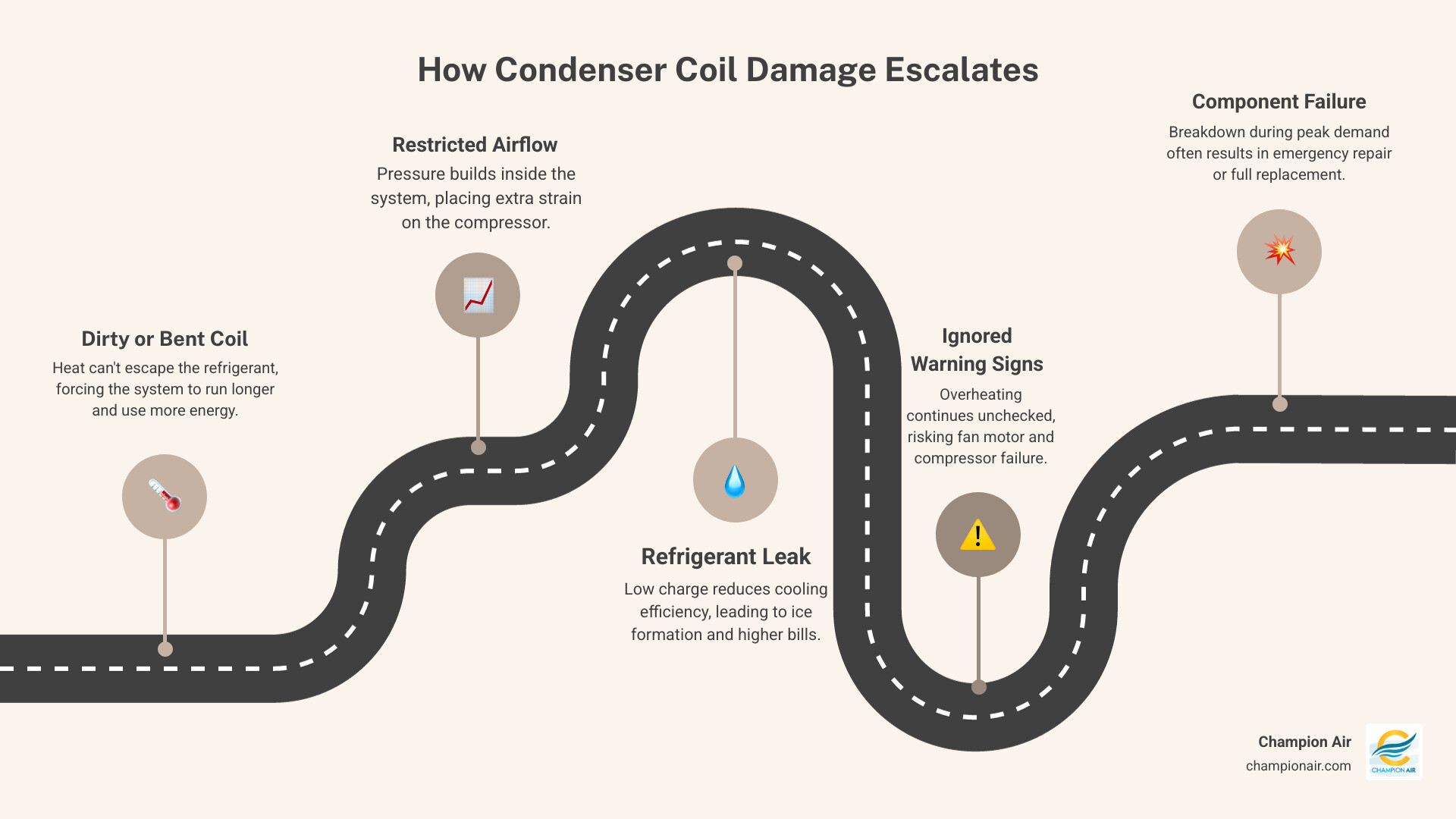
How condenser coil damage leads to costly ac repair is something many Arizona homeowners deal with during extreme summer heat. When the condenser coil in your outdoor unit is dirty, bent, corroded, or leaking, your AC can't release heat properly. That forces the entire system to work harder, raises strain on major components, and increases the chance of a breakdown when you need cooling most.
Here's a quick look at how the damage chain works:
| Stage | What Happens | Why It Matters |
|---|---|---|
| Dirty or bent coil | Heat can't escape the refrigerant | System runs longer and loses efficiency |
| Restricted airflow | Pressure builds inside the system | Compressor operates under excess strain |
| Refrigerant leak | Low charge reduces cooling | Ice forms and comfort drops |
| Ignored warning signs | Overheating continues unchecked | Fan motor, compressor, or coil can fail |
| Component failure | Breakdown during peak demand | Repair needs become more extensive |
The good news? Much of this can be prevented if you catch the early signs and schedule service before a smaller issue turns into a larger system problem.
At Champion Air Conditioning & Heating, we've seen how condenser coil damage leads to costly AC repair for homeowners across Phoenix, Scottsdale, and Mesa who didn't know what to watch for. In the sections below, we'll walk you through what condenser coils do, the warning signs of damage, and when it's time to call for professional AC service in Arizona.
To understand why a little bit of dirt or a few bent fins can cause such a headache, we first have to look at what the condenser coil actually does. Think of your AC system like a giant heat sponge. The indoor coil (the evaporator) soaks up the heat from inside your home. That heat is then carried through refrigerant lines to the outdoor unit.
The condenser coil's job is to "squeeze" that sponge. As the hot refrigerant gas flows through the outdoor coils, a large fan pulls air across the fins, blowing the heat away and turning the refrigerant back into a liquid so it can go back inside for another round.
How condenser coil damage leads to costly ac repair in a central AC system
When we talk about how condenser coil damage leads to costly ac repair, we are really talking about a failure in heat transfer. If the coil is coated in Scottsdale dust or the aluminum fins are flattened by a pressure washer, the heat has nowhere to go.
This creates a "high head pressure" situation. Because the refrigerant isn't cooling down, the pressure inside the lines spikes. Your AC stays on longer and longer, trying desperately to reach the temperature you set on the thermostat. This extra work doesn't just affect efficiency; it physically wears down the internal valves and seals of your system.
Why a damaged condenser coil affects more than just cooling
A damaged coil is rarely an isolated problem. Its the first domino in a chain reaction. When the coil can't shed heat, the system experiences:
- Compressor Stress: This is the "heart" of your AC. High pressure makes the compressor work at its limit and can lead to major system problems.
- Fan Motor Wear: The outdoor fan has to work harder and run longer to try to pull air through restricted coils, which can shorten motor life.
- Frozen Indoor Coils: It sounds backward, but if the outdoor coil is damaged or leaking refrigerant, the pressure imbalance can actually cause the indoor unit to turn into a block of ice, cutting off all airflow to your home.
Signs Your Condenser Coil Is Damaged or Failing
In the middle of a Phoenix summer, you don't want to wait for the system to stop blowing air entirely before you realize there's a problem. Most condenser coil issues give off "cries for help" long before the final breakdown.
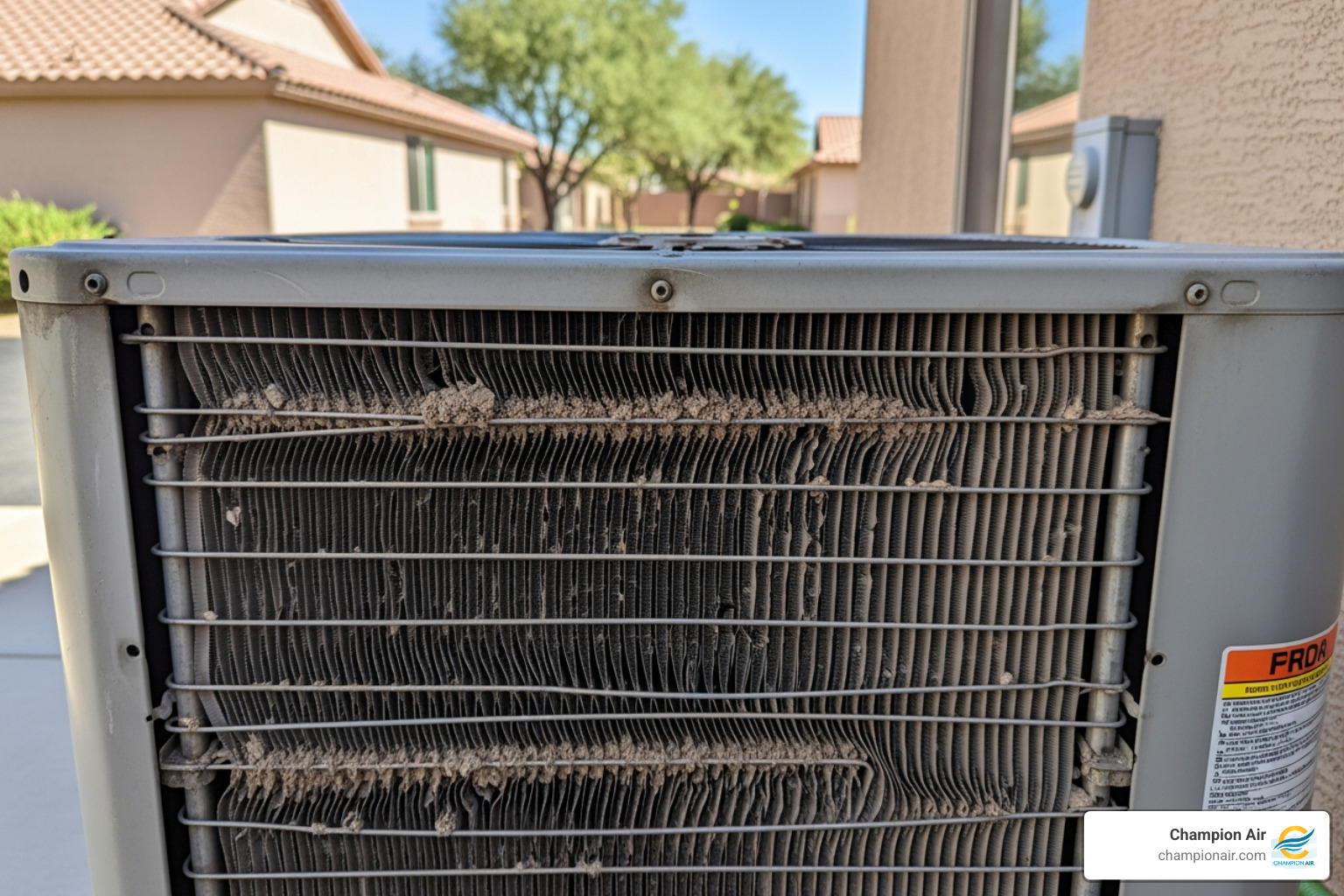
Early warning signs homeowners can spot before major AC damage
If you notice any of the following, your condenser coil might be struggling:
- Warm Air from Vents: If the air feels "room temperature" instead of crisp and cold, the heat rejection process is likely failing.
- Unusual Noises: Hissing usually points to a refrigerant leak in the coil. Buzzing or rattling can indicate that the compressor is struggling with high pressure.
- Short Cycling: This is when the AC turns on and off every few minutes. Its often a safety mechanism because the system is overheating.
- Higher Energy Bills: If your usage hasn't changed but your bill has jumped significantly, your system is likely running much longer than it should to compensate for a dirty or damaged coil.
How condenser coil damage leads to costly ac repair when warning signs are ignored
Ignoring these signs is like driving your car while the engine temperature needle is in the red. Eventually, something is going to fail. When a system runs constantly with a damaged coil, it can lead to an emergency breakdown. In areas like Surprise or Gilbert, a midsummer AC issue is not just inconvenientit can quickly make your home uncomfortable and unsafe in extreme heat.
What fin damage is too much before performance drops
We often get asked, "How many bent fins are too many?" The fins are those tiny, accordion-like aluminum slats on your outdoor unit. They are incredibly delicate.
If you see a small area the size of a silver dollar thats bent, its probably okay. However, if more than 10% to 20% of the coil surface is flattened or crushed, you have a major airflow restriction. This is common after a heavy monsoon storm or if someone accidentally hits the unit with a lawnmower. If the damage is widespread, its no longer a DIY fix with a fin comb; its time for a professional evaluation.
What Causes Condenser Coil Damage in Arizona Homes
Living in the desert presents unique challenges for HVAC systems. While homeowners in other states deal with humidity, we deal with "The Big Three": dust, heat, and monsoons.
Dirt, debris, and bent fins that block airflow
Our famous Arizona dust storms (haboobs) are the number one enemy of your condenser coil. They coat the fins in a thick layer of silt that acts like a thermal blanket. Instead of the heat escaping into the air, it gets trapped against the coil.
Common debris we find in units in Mesa and Chandler include:
- Monsoon Dust: Fine silt that gets deep into the "spine" of the coil.
- Lawn Clippings: If your landscaper blows grass toward the unit, it sticks to the wet coils.
- Pet Hair: If you have a dog that likes to lounge near the AC, their fur can quickly clog the intake.
Corrosion, leaks, and environmental wear
Corrosion is a "silent killer" for AC units. Formicary corrosion happens when copper tubing reacts with chemicals in the environment (like cleaning products or even certain building materials), creating microscopic pinhole leaks.
In our region, we also see "pitting" from the extreme temperature swings. The metal expands and contracts so much between the 115-degree days and 60-degree nights that it can eventually develop stress fractures.
Physical impact and maintenance mistakes that shorten coil life
Sometimes, we are our own worst enemies. We’ve seen homeowners try to "help" their AC by using a high-pressure power washer on the coils. Do not do this. High pressure will flatten the aluminum fins instantly, permanently damaging the unit.
Other common causes of physical damage include:
- Rocks and Debris: Thrown by lawnmowers or during high-wind storms.
- Pet Urine: This is a major issue. Dog urine is highly acidic and will eat through aluminum fins and copper tubing in a matter of months.
- Improper Covers: Using a plastic tarp that doesn't breathe can trap moisture and accelerate corrosion.
To learn more about keeping your system safe, check out our guide on How to Prevent AC Emergencies with Maintenance.
Repair or Replace? What Homeowners Should Consider
When we find a damaged coil, the big question is always: "Can we fix it, or do we have to replace the whole thing?" The answer depends on the severity, the age of the system, and the type of refrigerant it uses.
When coil cleaning or minor repair may solve the problem
If the damage is purely topicalmeaning the coil is just very dirty or has a few bent finsa professional deep cleaning and "combing" can often restore efficiency. We use specialized, non-acidic cleaners that break down desert grime without eating the metal.
If there is a localized leak in an accessible spot, we may be able to solder the copper. This is often a viable path for newer systems that are still under warranty. You can read more about typical repair scenarios in our AC Repair Cost Phoenix guide.
When full condenser coil replacement makes more sense
Replacing just the coil is a major repair. It involves cutting the refrigerant lines, removing the old coil, welding in a new one, and then performing a full system vacuum and recharge.
Replacement is usually the better move if:
- The coil has multiple leaks (indicating its deteriorating from the inside).
- The fins are so corroded they are literally crumbling into dust (common in older units).
- The unit is between 8 and 12 years old.
Deciding between a fix and a fresh start is a big choice. We've put together a resource to help: When to Repair vs Replace Your AC System.
When coil damage can lead to compressor replacement or full system replacement
This is the worst-case scenario. If a damaged coil is left long enough, it can eventually damage the compressor. Because the compressor and the coil are two of the most important parts of the outdoor unit, if both are failing, replacing the entire system may be the more practical long-term solution.
| Factor | Coil Repair/Cleaning | Full System Replacement |
|---|---|---|
| Best For | Units under 8 years old | Units over 12 years old |
| Efficiency | Restores original SEER | Upgrades to higher SEER2 |
| Warranty | Usually 1 year on labor | 10+ year parts warranty |
| Reliability | Other old parts remain | Entirely new components |
If you're facing a dead compressor, you might want to look at the AC Compressor Replacement Cost versus the Air Conditioner Replacement Cost to compare the options that may make the most sense for your home long-term.
How to Prevent Costly Condenser Coil Damage
The best way to deal with an expensive repair is to make sure it never happens in the first place. Fortunately, condenser coils are relatively easy to protect with a little bit of consistency.
Simple homeowner maintenance that helps protect the outdoor coil
You don't need to be an HVAC expert to help your AC survive the summer. Here are a few things you can do:
- The 2-Foot Rule: Keep plants, shrubs, and storage bins at least two feet away from the outdoor unit. It needs to breathe!
- Gentle Rinsing: Once a month during the summer, turn off the AC and gently rinse the outdoor unit with a garden hose (not a pressure washer). This washes away surface dust before it can bake onto the coils.
- Trim the Trees: Ensure no branches are hanging directly over the unit, which can drop sap or leaves into the fan.
- Pet Barrier: If you have a male dog, consider a small, breathable fence around the unit to prevent "marking" on the coils.
Why professional tune-ups matter in Phoenix-area cooling season
While homeowner care is great, there are things only a pro can see. During a AC Maintenance Tune-Up Phoenix AZ, we check for things like:
- Refrigerant Levels: A tiny leak can go unnoticed for months but will eventually burn out your compressor.
- Electrical Connections: We check for pitted contactors or failing capacitors. In fact, Capacitor Failure is the Most Common AC Repair we see, and it's often caused by the system overheating due to dirty coils.
- Acid Testing: We can test the oil in your system to see if corrosion is starting to happen internally.
What happens if you keep running the AC with condenser coil damage
We get it—it’s 110 degrees in Scottsdale and you just want the house to stay cool. But "powering through" a coil issue is a recipe for disaster. If the system is struggling, the best thing you can do is turn it off and call for AC Repair Service Phoenix AZ.
Running a damaged system can lead to a "terminal" failure. This is when the compressor motor shorts out and sends acid through the entire refrigerant line set. Once that happens, the cost of repair skyrockets because the entire system must be flushed or replaced.
Frequently Asked Questions About Condenser Coil Damage
Can dirty condenser coils really raise energy bills that much?
Yes, absolutely. Dirty or damaged condenser coils can reduce your system's efficiency by 15% to 30%. In the peak of an Arizona summer, that can mean your AC has to run much longer just to maintain the same indoor temperature.
Can a damaged condenser coil make the indoor coil freeze?
It sounds like a paradox, but yes. If the outdoor coil is leaking refrigerant, the pressure inside the evaporator (indoor) coil drops. When pressure drops, the temperature of the coil drops below freezing. Moisture from your indoor air then hits that coil and instantly turns to ice, eventually blocking all airflow.
How long can an AC run with a damaged condenser coil before bigger repairs happen?
It depends on the severity of the issue, outdoor temperatures, and overall system condition. A system with a severely restricted coil may start tripping safety controls very quickly. If it keeps running under that kind of stress, major component failure can happen much sooner than many homeowners expect.
Conclusion
At Champion Air, we've spent years helping our neighbors in Phoenix, Scottsdale, Mesa, and throughout the Valley stay cool without breaking the bank. We know that how condenser coil damage leads to costly ac repair is a stressful topic, but it doesn't have to be a disaster.
By keeping your outdoor unit clear of debris, rinsing it occasionally, and scheduling a professional tune-up every spring, you can extend the life of your system by years. Whether you need a quick cleaning or a complex repair, we're here for you 24/7 with no overtime charges.
Don't let a dirty coil turn into a dead compressor. If your AC is struggling, making noise, or your bills are creeping up, give us a call. We’ll get your system back to peak efficiency so you can get back to enjoying the comfort of your home. For all your cooling needs, visit our Air Conditioning service page today.
About the Author
Champion Air
More Articles
View All PostsKeep Reading
Related Articles


Ready to Get Started?
Whether you need a repair, maintenance, or a new installation, our expert team is here to help.