Defrosting Your Heat Pump the Right Way
Champion Air
Discover heat pump ice buildup causes and what to do. Thaw safely, fix defrost issues, and prevent freezing in Phoenix winters.
Defrosting Your Heat Pump the Right Way
Is Ice on Your Heat Pump Normal — or a Sign of Trouble?
Heat pump ice buildup causes and what to do is one of the most common winter HVAC concerns homeowners face — and the good news is that most cases are manageable once you know what you're looking at. Here's a quick breakdown:
Common causes of heat pump ice buildup:
- Low refrigerant levels causing coils to get too cold
- Restricted airflow from dirty filters or debris around the unit
- A malfunctioning defrost board or sensor
- A stuck or failing reversing valve
- Gutter runoff dripping directly onto the unit
- Extreme cold combined with high outdoor humidity
What to do right now:
- Turn the heat pump off at the thermostat
- Clear any snow, leaves, or debris from around the outdoor unit
- Switch to fan-only mode to help melt light frost
- Wait up to 2-4 hours for the unit to thaw naturally
- Call a licensed HVAC technician if ice persists beyond 4 hours
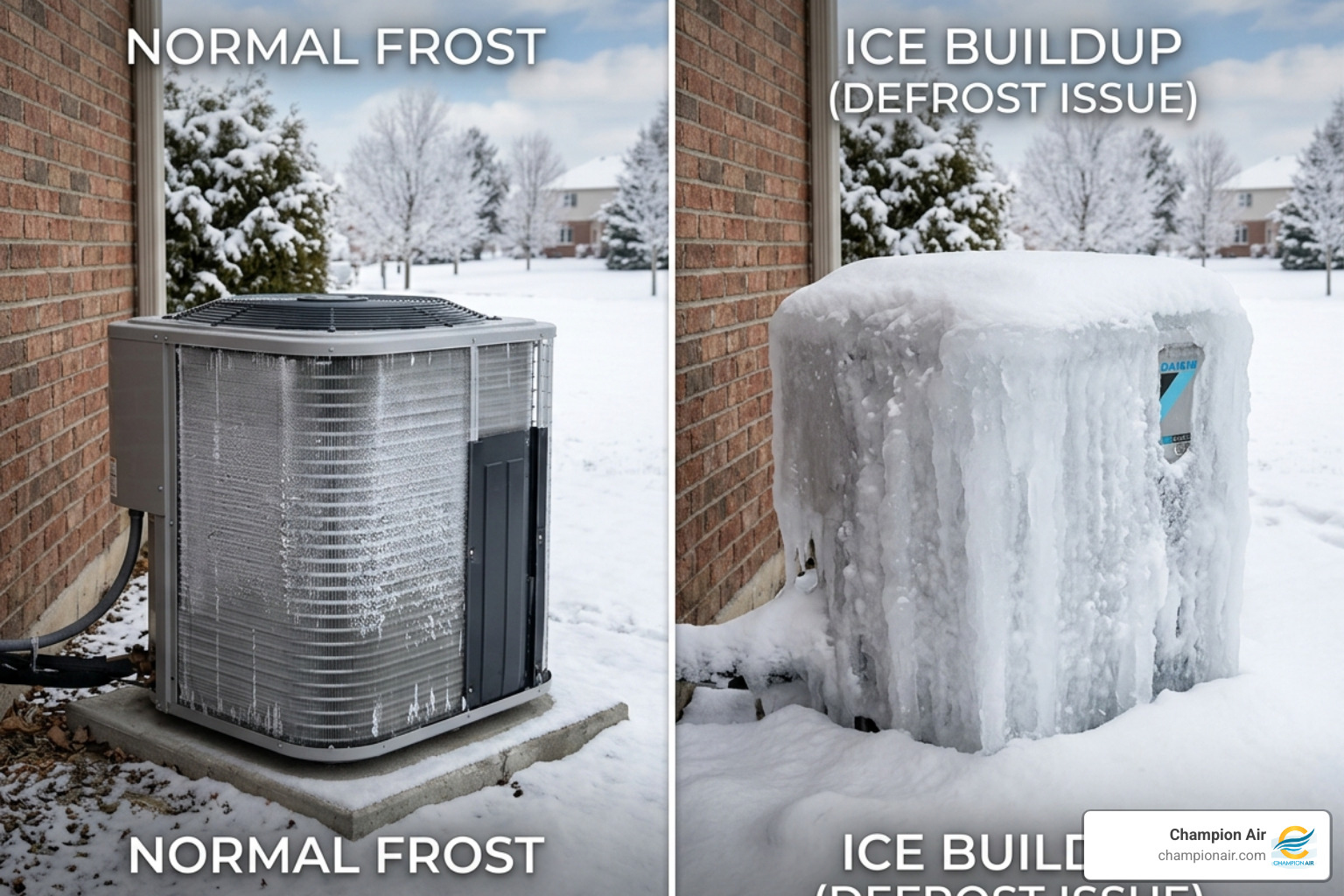
A thin layer of frost on your heat pump's outdoor coils during cold weather is completely normal. Your system has a built-in defrost cycle designed to handle it automatically every 30 to 90 minutes. But when ice builds up into a thick, solid layer that won't melt — that's when you have a problem that needs attention.
Even in Arizona, winter nights in Phoenix, Scottsdale, and the surrounding Valley can dip low enough to trigger frost on your outdoor unit. Most homeowners don't expect it, which makes it all the more alarming when they walk outside and find their heat pump looking more like an ice sculpture than a heating system.
I'm Barry Farah, and leading one of Arizona's largest residential HVAC companies has given me insight into every dimension of heat pump ice buildup causes and what to do — from the simple fixes homeowners can handle themselves to the mechanical failures that need a professional's eye. Let's walk through exactly what's happening with your system and how to get it running safely again.
Understanding Heat Pump Ice Buildup Causes and What to Do
To understand why your heat pump is acting like it belongs in the Arctic, we first have to look at how it works. Unlike a furnace that creates heat by burning fuel, a heat pump is a master of relocation. In the winter, it extracts heat from the outdoor air and moves it inside.
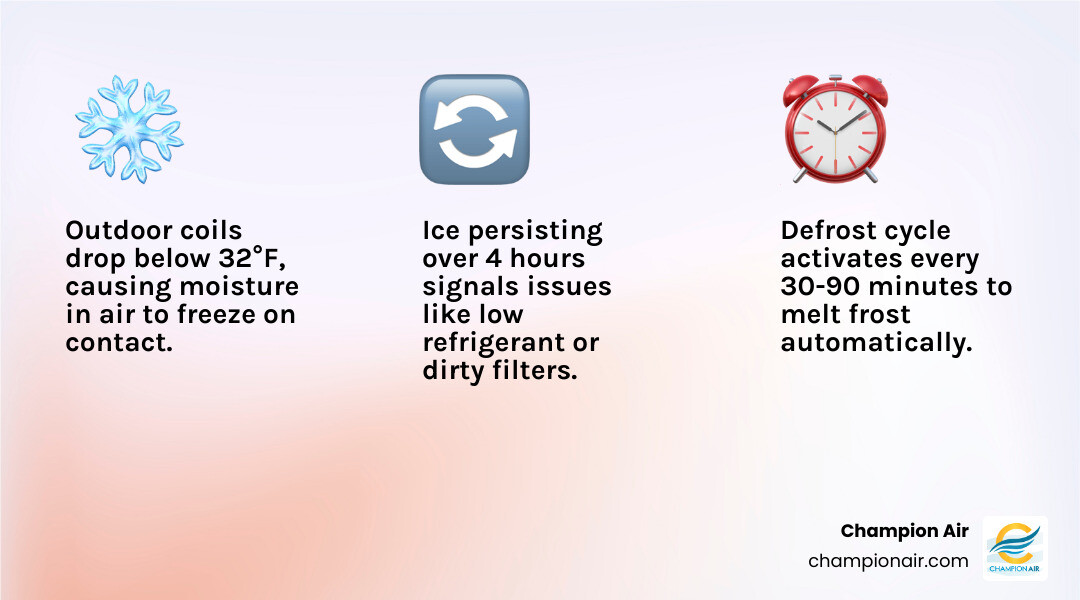
Even when it feels chilly to us, there is still thermal energy in the air. However, to pull that heat in, the outdoor coils have to get very, very cold—often much colder than the air itself. When the temperature of those coils drops below the freezing point (32°F), any moisture in the air (condensation) will naturally freeze upon contact.
Think of it like the frost that forms on your car's windshield on a crisp morning in Cave Creek or Anthem. A little bit is expected. But when that frost turns into a thick sheet of ice, it acts like a thermal blanket in the worst way possible. It insulates the coils, preventing them from "breathing" and absorbing heat. If you aren't sure if your system is operating at peak performance, you can learn more about Troubleshooting Your HVAC System to see if other factors are at play.
Identifying Heat Pump Ice Buildup Causes and What to Do in Phoenix
You might be thinking, "It’s May 2026, and I live in Phoenix. Does this really apply to me?" Absolutely. While we aren't exactly known for blizzards, our desert nights can be surprisingly damp and cold.
In the Valley, we often see high humidity levels (above 80%) during our winter rainy spells or when the dew point settles. When temperatures drop toward the freezing mark, that high humidity provides the perfect "fuel" for ice formation. If your unit is struggling during a particularly cold snap in Peoria or Glendale, you might need Emergency Heat Pump Repair in Phoenix to ensure your home stays comfortable.
When Frost Becomes a Problematic Ice Block
So, when does a little white frost turn into a "call the pros" situation? We use the four-hour rule.
If your heat pump is encased in ice for longer than four hours, it is no longer a "normal" part of operation; it’s a malfunction. A healthy system should trigger its defrost cycle long before that. When ice persists, it restricts airflow so severely that your heat pump’s efficiency—which is usually two to three times higher than electric resistance heating—drops to zero.
Ignoring this can lead to "short cycling," where the unit turns on and off rapidly, or worse, permanent damage to the compressor. If you notice your unit looks like an igloo or is making a grinding sound as the fan hits the ice, it's time to dig deeper into Common HVAC Issues and Troubleshooting to identify the culprit.
How the Defrost Cycle Protects Your System
Your heat pump isn't defenseless against the cold. It comes equipped with a "defrost mode," which is essentially the system's way of doing a quick "U-turn."
When the defrost cycle kicks in, the reversing valve switches the flow of refrigerant. For about 10 to 15 minutes, your heat pump acts like an air conditioner in reverse: it sends hot refrigerant to the outdoor coils to melt the ice.
During this time, you might notice two things that seem scary but are actually normal:
- The outdoor fan stops: This allows the coils to heat up faster.
- Steam rises from the unit: This is just the ice melting and evaporating. It’s not smoke!
Because the system is technically "cooling" the outdoor unit to heat the coils, it usually kicks on your auxiliary heat (the heat strips in your indoor unit) so you don't feel a blast of cold air inside your home. If you're worried your system isn't making this transition correctly, we offer expert Heat Pump Repair in Phoenix to get those sensors back in sync.
Normal Defrost Cycle Duration and Frequency
How often should this happen? On a typical cold night in Scottsdale or Tempe, a heat pump might enter defrost mode every 30 to 90 minutes.
The cycle itself should be relatively short—usually between 10 and 15 minutes (though some modern units can finish in as little as 2 to 5 minutes). You'll often hear a distinct "whooshing" sound when the reversing valve shifts. If you find your unit is constantly in defrost mode or never seems to clear the ice, you might be looking for Affordable Heat Pump Repair in Phoenix to address a faulty timer or sensor.
Signs of a Malfunctioning Defrost Board
The "brain" of this operation is the defrost control board. If this board fails, the unit won't know when to melt the ice.
Signs of a bad board include:
- The unit is completely encased in ice but the fan is still trying to run.
- Your indoor vents are blowing cold air for long periods (because the system is stuck in "cooling" mode).
- Your energy bills skyrocket because the system is relying 100% on expensive auxiliary heat.
If you’re in the East Valley and your system is behaving strangely, our team provides 24/7 Heat Pump Repair in Chandler to diagnose these electrical gremlins before they lead to a total system lockout.
Common Reasons Your Heat Pump is Freezing Solid
While the weather is often the trigger, mechanical failures are usually why the ice stays. Here is a comparison of what might be causing your winter woes:
| Environmental Causes | Mechanical Failures |
|---|---|
| High Humidity: Moisture freezes on coils below 32°F. | Low Refrigerant: Causes coils to get "too cold," accelerating ice. |
| Freezing Rain/Snow: Can physically block the fan or coils. | Faulty Reversing Valve: System can't switch to defrost mode. |
| Gutter Runoff: Water dripping on the unit creates an ice block. | Bad Defrost Sensor: The "brain" doesn't know ice is present. |
| Poor Drainage: Melted ice refreezes at the base. | Fan Motor Failure: Lack of airflow causes immediate freezing. |
If you suspect a mechanical issue, scheduling Heat Pump Maintenance in Scottsdale is the best way to catch these problems before the first cold snap hits.
Airflow Restrictions and Heat Pump Ice Buildup Causes and What to Do
Airflow is the lifeblood of your heat pump. If the air can't move across the coils, the heat exchange process fails, and ice starts to form.
The most common culprit? A dirty air filter. It sounds simple, but a clogged filter inside your home can actually cause the outdoor unit to freeze up. Outside, things like fallen leaves, tall grass, or even "desert tumbleweeds" can lean against the unit and block the intake. Regular Heat Pump Maintenance in Phoenix includes cleaning these coils and checking filters to ensure your system can "breathe" freely.
The Role of Outdoor Unit Placement and Drainage
Sometimes, the problem isn't the machine—it's the environment.
We often see units in Paradise Valley or Surprise that were installed directly under a roof valley or a leaking gutter. When it rains, water drips directly onto the fan and coils. On a freezing night, this creates a solid block of ice that no defrost cycle can handle.
Additionally, your unit should be level. If the concrete pad has sunk, meltwater from a defrost cycle can pool at the base and refreeze, eventually building up from the bottom like a glacier. We recommend maintaining at least 18 to 24 inches of clearance on all sides of the unit. If your unit needs to be leveled or moved, our experts in Heat Pump Repair in Phoenix can help.
Safe DIY Steps to Thaw Your Frozen Unit
If you wake up to a frozen unit, don't panic! There are a few safe steps you can take to try and resolve the issue yourself before calling us.
- The "Fan Only" Trick: Go to your thermostat and switch the system from "Heat" to "Off," then turn the "Fan" setting to "On." This runs the indoor blower and the outdoor fan (if it's not stuck) to move ambient air over the coils. If the temperature is above freezing, this will often melt the ice in 2 to 4 hours.
- Clear the Perimeter: Use a soft broom to remove leaves or debris from the sides of the unit.
- Check Your Filter: If it looks like a dusty rug, replace it immediately.
- Lukewarm Water: You can gently pour lukewarm water (NOT boiling) over the coils to help speed up the melting process.
For more serious icing, you might need to switch to your "Emergency Heat" setting while you wait for a technician. You can find more tips on this in our guide to Emergency Heat Pump Repair in Phoenix.
What Not to Do When De-Icing Your System
In our years of service in Mesa and Gilbert, we’ve seen some "creative" DIY attempts that ended in disaster. Please avoid these:
- No Sharp Objects: Never use a screwdriver, ice pick, or shovel to chip away ice. The refrigerant coils are made of soft copper or aluminum; one slip and you’ve caused a massive (and expensive) leak.
- No Boiling Water: Extremely hot water can cause "thermal shock," potentially cracking the metal coils.
- No Chemicals: Do not use rock salt or de-icing sprays. These are highly corrosive and will eat away at your system's components.
If these DIY steps don't work, it's a sign of a deeper issue. Check out our Common HVAC Issues and Troubleshooting page for more guidance.
Using Emergency Heat Settings Correctly
Most thermostats have an "Emergency Heat" (EM Heat) or "Auxiliary Heat" (AUX) setting. This bypasses the outdoor heat pump entirely and uses electric heat strips to warm your home.
While this will keep you warm, it is much more expensive to run. Use it as a temporary fix while your unit thaws or while you wait for a technician. If you find yourself needing EM Heat every night, it’s time to look for Affordable Heat Pump Repair in Phoenix to get your primary system back online.
Frequently Asked Questions About Heat Pump Icing
Is it normal to see steam coming from my heat pump in winter?
Yes! As mentioned earlier, steam is a sign that the defrost cycle is working correctly. It is simply the accumulated frost melting and evaporating off the warm coils.
How often should my heat pump enter defrost mode?
In very cold or humid conditions, it is normal for the unit to defrost every 30, 60, or 90 minutes. If it is happening every 15 minutes, or if it never enters defrost mode at all, you likely have a sensor or board issue.
Can I cover my heat pump to prevent ice buildup?
No! Never cover a heat pump while it is in operation. A cover restricts the very airflow the system needs to function. This will cause the unit to work harder, spike your energy bills, and likely lead to a total system failure. If you want to protect it from falling ice or heavy rain, a "snow shield" or small roof can be installed, but it must be several feet above the unit and open on all four sides.
Conclusion
Finding heat pump ice buildup causes and what to do doesn't have to be a winter nightmare. Whether it’s a simple matter of changing a filter or a more complex issue with a reversing valve, understanding how your system handles the cold is the first step to a comfortable home.
At Champion Air, we’ve spent years keeping families warm in Scottsdale, Phoenix, Mesa, and throughout the Valley. From Anthem to Sun City, our NATE-certified technicians are ready to handle everything from routine Heat Pump Maintenance in Phoenix to 24/7 emergency repairs.
Don't let a frozen unit leave you in the cold. Schedule your professional heat pump service with Champion Air today and let us ensure your system is ready for whatever the Arizona winter throws its way!
About the Author
Champion Air
More Articles
View All PostsKeep Reading
Related Articles


Ready to Get Started?
Whether you need a repair, maintenance, or a new installation, our expert team is here to help.